



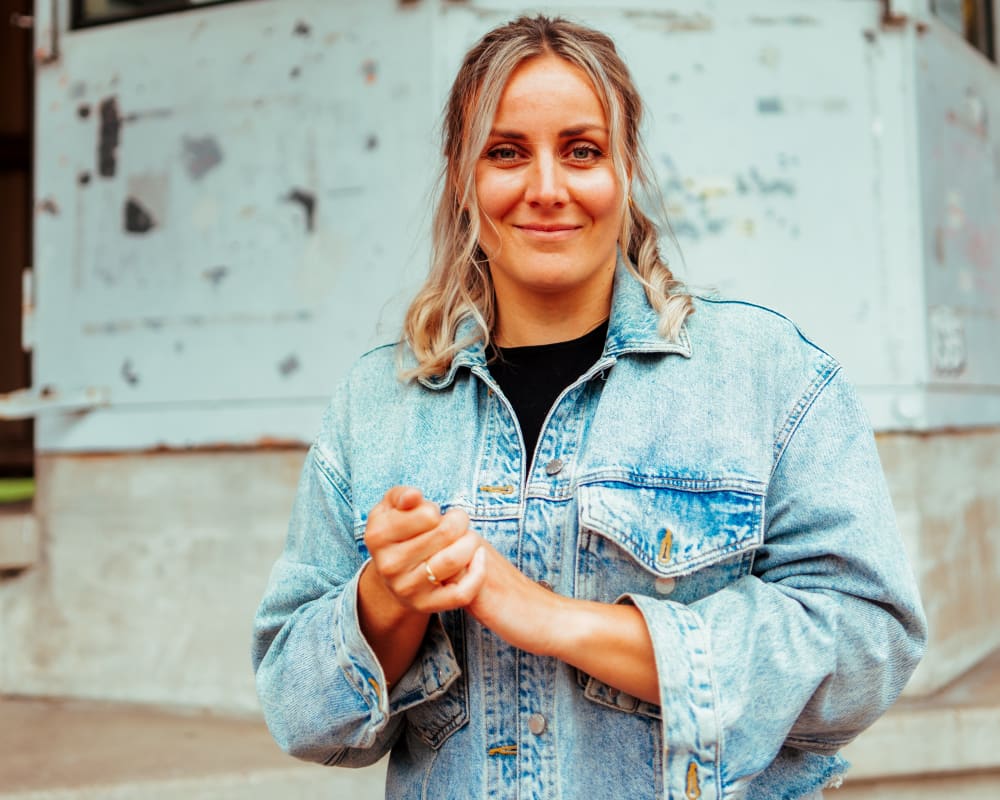

The European Athletics Future Leaders Programme is celebrating 20 years since its launch at the 2006 European Athletics Championships in Gothenburg.
What began as a biennial forum has evolved into a long-term leadership pathway that continues to shape the future of the sport.
As we look towards the 2026 edition of the Future Leaders Forum which will take place in Birmingham from 12–17 August, this Future Leaders Focus series meets some of the past Future Leaders who have since established their career in athletics.
To mark Earth Day (22), we feature Katrin Heyers of Germany, who has played a key role in the growth of sustainability in the sport.
Tell us about yourself, your current role and you the Future Leaders Forum you attended
I am a spokesperson for Sports Development & representative in the association committee of the German Athletics Federation / European Athletics Development Commission Member, leading the working group for sustainability.
I attended 2014 as a participant, 2016 as a facilitator, 2022 as a consultant to present the Gender Leadership Programme and 2024 as a speaker with my own leadership training.

What are you doing now? Tell us about your current role.
Within athletics, I have two main volunteer positions, I am a spokesperson for Sports Development & representative in the association committee of the German Athletics Federation / European Athletics Development Commission Member, leading the working group for sustainability.
Professionally, I have started my own consulting firm after finishing my PhD in psychology, advising sports federations on any topic related to psychological competencies. This includes coaching education, referee training, sport psychological work with athletes and development of learning materials.
What do you enjoy the most about what you do?
In my volunteer roles, it’s very easy to say, the people! The friends you make along the way, the experiences you create together is what drives me to spend hours in (sometimes quite boring) board meetings and online calls. And when all the work of the winter pays off and your project is launched in the summer, and you see it affecting people, that is absolutely rewarding!
Within my job, there is very little I do not enjoy. I’ve turned my hobby into my career, and I love being able to bring psychological science and knowledge into the world of sports. The power it has is still underestimated, and I feel like I can make sport a bit better, day by day.

How did you get into this field?
I started volunteering while I was still in school by applying to a youth project of the German Athletics Federation on anti-doping work. Then one thing led to another, and when I was able to join the FLF in 2014 in Zurich, my athletics life changed completely. That week was one of the best weeks of my life and it opened so many doors simply because of all the people I was able to meet.
Within my job, it was actually a former colleague from European Athletics that encouraged me to develop my own leadership content. We were sitting at the European Championships in Munich in 2022, watching the competition, and he basically challenged me to do it. From that point on, I started developing content, and connecting to people and federations to see if they needed my offers. Three years later, I founded DecathLead.
What has been one defining moment in your career so far?
In 2019, I was able to join a week-long training provided by World Athletics to become a speaker for a Gender Leadership Course. EA had nominated me and Donna Fraser, OBE, a four-time Olympian and one of my athletics heroes when I grew up. I was 25 back then, had never been a professional athlete and all of sudden found myself surrounded by all these incredible individuals. My imposter-syndrome kicked hard.
I remember arriving the first evening in Monaco, being completely star-struck by everyone and everything. Throughout the week, I met some of the most incredible athletes this sport has ever seen, got to hang out with some of the brains behind amazing projects, and most of all learned what really matters in life - it’s the friends you make.

What skills or experiences helped you get to where you are today?
I could list obvious, boring things, but I am going with my weirdest observation - not needing too much sleep is certainly a skill that has played in my favour. The best, most interesting discussions happen after the official part of any event is done, and I love the stories that are being shared, the knowledge that some people only bring out when they have a freedom of an informal chat.
Who or what inspires you in your career?
“Treat others as if they know something you don’t“ is a statement by the psychologist Carl Rogers that has defined my actions in a great deal. Everyone has an amazing story at hand, and I often challenge myself to figure it out when I meet new people.

What advice would you give to someone just starting out in sport or leadership?
I’ve been asked this question quite often in the past years, and I always emphasize that you need to do the work. Everyone has an idea and an opinion on how to do things or how to improve them, but if you are the one who actually tries out, does the work and responds to the email in time, you will stand out. It’s not an easy one, but an effective one.
What’s something you wish you knew when you were starting your career?
1) Always be the nice one, but never the push-over. Set boundaries.
2) Quality costs money.

Any exciting projects or goals you’re working on right now?
Oh, yes, too many! With the sustainability working group, we are launching the European Athletics Sustainability Ambassador Project. On the national level, we are launching a Leadership Hub and I am leading the project group, while on a personal level, I have been writing a novel for more than a year that I cannot wait to publish.