





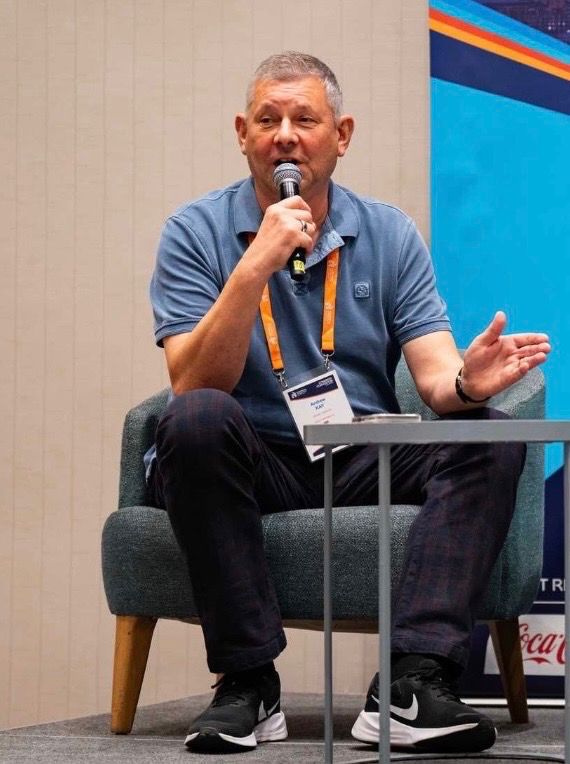
Directing the live in-stadium experience at a major athletics championship is what Andy Kay, who served as the Event Presentation Lead for the Birmingham 2026 European Athletics Championships from 10-16 August, describes as an organic jigsaw.
Inside the control room at Alexander Stadium, orchestrating the live show requires split-second synchronicity: balancing track finals, simultaneous field events, in-bowl audio-visuals and unforgiving host broadcast windows in real time. Yet for Kay and his production team, the defining principle of the week was deliberate restraint.
"We made a conscious decision right from the start that this wasn’t going to be the 'European Special Effects Championships,'" said Kay during a break from the action in Birmingham.
"Event presentation only works when it serves the sport, not the other way around. Our job is to give the athletics room to breathe and let the natural drama on the track and in the field deliver the emotional punch."
Athletics comes first
That athletics-first philosophy shaped every aspect of the timetable. Rather than overloading every heat and semifinal with spectacle, high-production, one-by-one gate entrances were reserved exclusively for marquee medal deciders.
Trackside interviewers worked within razor-thin 90-second broadcast windows to capture immediate reactions from headline stars before live coverage returned to the action.
"Live stadium presentation is an organic jigsaw," said Kay. "You are coordinating eight television production feeds, multiple field events, track finals and music, all while working to host broadcast windows that can change in a split second. You have to react instinctively to the rhythm of the stadium."
The technical engine
Behind that seamless stadium flow sat an immense technical operation delivered by sports presentation specialists ADI. Thomas Taylor, their Head of Sales and Sport Presentation, directed a 29-strong team operating across 10 kilometres of fibre connectivity.
The stadium canvas featured 2280 unique pieces of creative digital content displayed across 300 square metres of super-wide viewing screens, a 300-square-metre digital perimeter, dedicated presentation stages and eight live sports presentation cameras including three wireless roaming units and remotely operated cameras dedicated to the medal ceremonies.
Reading the Alexander Stadium crowd
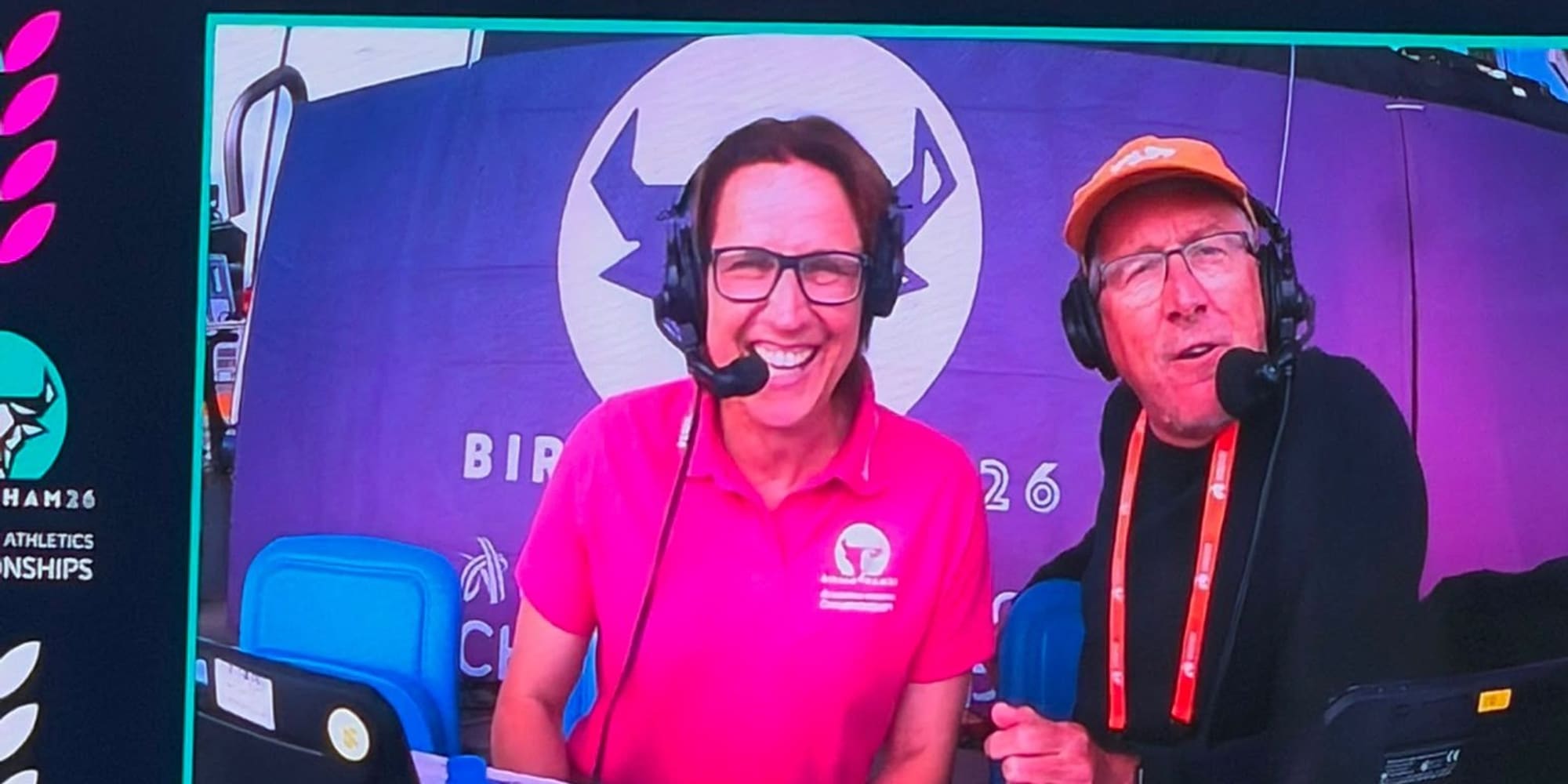
Translating that technical power into stadium atmosphere was the commentary duo of Geoff Wightman and Katharine Merry, who have shared the microphone across roughly 30 major championships since 2017.
"You can tell quite early on if a crowd is keen to get interactive with the athletes," said Wightman. "The main test is rhythmic clapping for field events. The louder and more co-ordinated they are around all parts of the stadium at the start, the more likely they are to go with the flow as things build throughout a session.
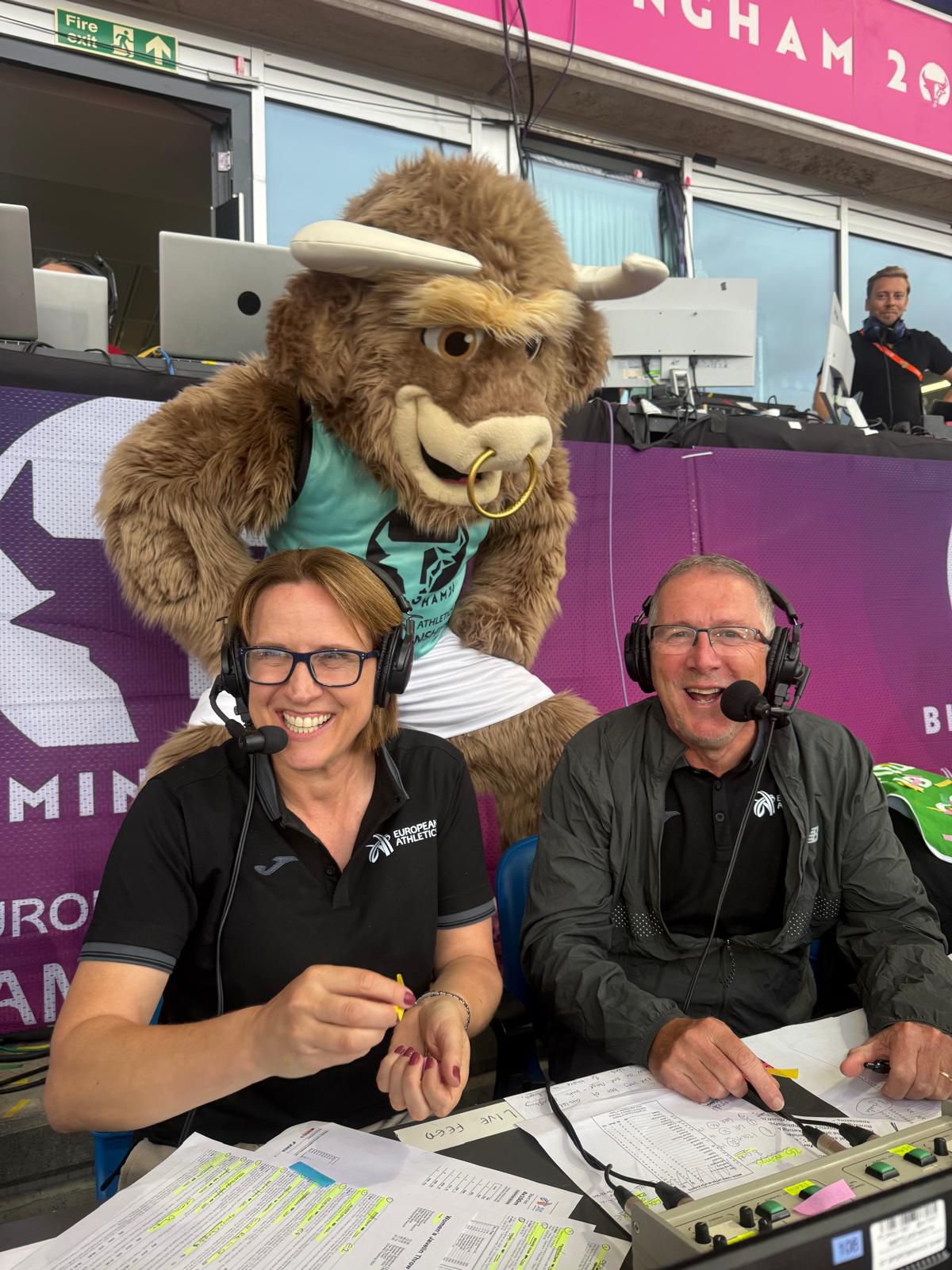
"It helps that Kath and I know each other’s strengths and weaknesses quite well," Wightman added with a smile. "Her main two weaknesses are Aston Villa and Bruno Mars, and her main strength is that she has a friend who works at Cadburys and therefore often brings along free chocolate!"
Defining moments
When the technical choreography, the commentary box and the stadium energy aligned, it produced the defining memories of the championships.
"My personal standout moment of the week was Amy Hunt’s 100m victory," said Kay. "The broadcast alignment, the pyrotechnics in the sky, instant athlete recognition and genuine crowd engagement all coming together at once. Second best? The entire stadium joining Geoff and Kath for a rendition of Sweet Caroline!"
By balancing vast digital infrastructure with an instinctive feel for championship track and field, Birmingham’s event presentation team proved that the most powerful stadium show is the one that lets the sport speak for itself.