



Athletics has never struggled to create memorable championship moments.
The bigger challenge is often what happens afterwards – whether an event leaves a lasting effect beyond the stadium, the broadcast and the results pages.
That question sits at the centre of the European Athletics Championships Birmingham 2026 and its integrated impact programme, BEYOND – an initiative focused on community benefit, sustainability, accessibility and inclusion.
While Birmingham 2026 will still be defined by elite competition, organisers are also placing deliberate emphasis on how the championships can support participation, widen access and strengthen local communities across Birmingham and the wider West Midlands region.
For Chris Moss, Development Director at UK Athletics and the lead for impact delivery on Birmingham 2026, that means moving away from some of the traditional language often associated with major events.
“When people hear the word legacy, they often think about a big event coming in with a large budget and leaving something behind – a facility, equipment or infrastructure,” he says. “Usually that’s very hyperlocal or temporary.”
Instead, Birmingham 2026 has consciously shifted towards talking about impact rather than legacy.
“We don’t have a legacy programme,” Moss explains. “We have an impact programme that looks at what happens before, during and after the championships.”
Beyond the event itself
The BEYOND programme is built around three strategic pillars: community benefit, environmental sustainability, and accessibility and inclusion.
The first of those pillars – community benefit – is where much of the Athletics for All thinking becomes most visible in practice.
Across Birmingham and the West Midlands, the championships are being used as a platform to support schools, local organisations, underserved communities and participation initiatives. That work involves a broad partnership network including StreetGames, Access Sport, The Daily Mile, parkrun, England Athletics, the Personal Best Foundation, Birmingham City Council as well as many others.
“There’s lots of different partners all working towards the same goal,” says Moss. “Improving community engagement, improving and widening access and using the championships as a driving force and a catalyst for some of that.”
Several initiatives are already underway.
The Birmingham 2026 Miles Challenge has seen more than 100 schools register within its first few weeks, while “Beyond Limits” educational resources and community activity packs have also been developed as part of the programme.
Participation figures linked to existing programmes have also increased. Across the West Midlands, 739 schools are now registered with The Daily Mile – representing an 8% increase – while junior parkrun participation across the region has nearly doubled over the past six months.
For Moss, one of the most important elements is ensuring that opportunities reach people who may not traditionally engage with athletics.
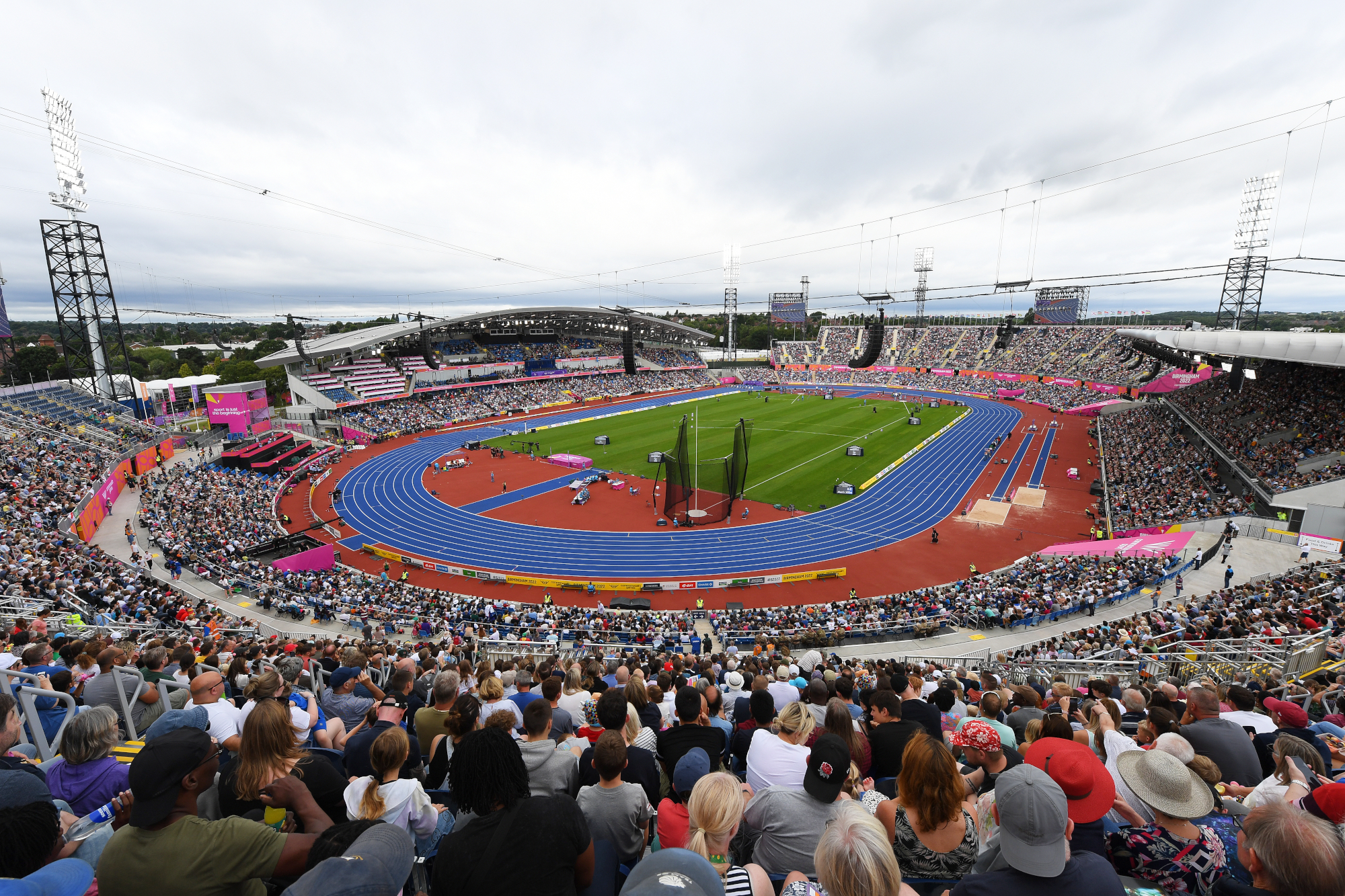
At the recent Great Birmingham Run, organisers extended 500 places in junior and 10km events to underserved communities and schools in areas of multiple deprivation across the city.
“It created access for families and young people who wouldn’t necessarily have had the opportunity,” says Moss. “That’s where you start seeing the impact in action.”
Lowering barriers to participation
The wider “Athletics for All” theme is the idea that athletics should create accessible entry points for people regardless of age, background, ability or previous connection to the sport.
Boiled down, the message is: just start moving.
That reflects a broader challenge facing many sports bodies across Europe. Participation remains strong in some areas, particularly recreational running, but younger audiences now have far more competition for their attention.
“We need to make the sport as attractive as possible,” says Moss. “No matter what facet of the sport we’re looking at – volunteering, leading, coaching or officiating – we need to make those opportunities attractive and appealing.”
Part of that means recognising that people engage with athletics in very different ways.
Internal European Athletics strategy work around Athletics for All increasingly frames the sport as a much broader ecosystem – one that includes not only elite athletes and pathway competitors, but also recreational runners, families, schools, volunteers, coaches and local communities.
The documents also note that many recreational runners do not necessarily consider themselves “athletes”, despite engaging regularly with running and movement.
That matters because the long-term health of athletics increasingly depends on widening the ways people connect with the sport.
The Athletics for All framework argues that broader participation can strengthen clubs, create larger volunteer networks, improve membership sustainability and support stronger long-term structures beneath elite performance.
Collaboration and continuity
One of the consistent themes running through Birmingham 2026’s approach is collaboration.
“It’s absolutely fundamental,” says Moss. “Without that collaboration, there’s only going to be minimal impact.”
The championships themselves may only last a matter of days, but the organisations involved in community delivery remain embedded locally long after the event ends.
That is part of the reasoning behind the BEYOND branding itself.
“One thing we’re aiming for is that activities continue beyond the championships,” says Moss. “We’re creating frameworks and partnerships to deliver those opportunities in the long term rather than just dropping activity in around the event itself.”
The approach also extends into accessibility and workforce development.
Volunteer applications for Birmingham 2026 have already exceeded expectations, with strong representation across gender, ethnicity and younger age groups.
Meanwhile, the Major Events Academy has already supported dozens of young people through work experience, coaching qualifications and pathways into employment linked to sport and events.
Accessibility planning is also being integrated directly into event operations, with dedicated consultancy support and ongoing reviews across digital platforms, communications and venue planning.
A broader picture of athletics
None of this replaces elite competition. Birmingham 2026 will still ultimately be judged by the quality of the championships themselves – the atmosphere, performances and sporting moments that define any major athletics event.
But there is also increasing recognition that major championships can play a wider role within the sport and within communities.
For athletics, that may mean creating more visible entry points into participation. It may mean building stronger links between schools, clubs and local initiatives. It may mean recognising volunteers, community organisers and recreational runners as part of the wider athletics landscape.
“The beauty of our sport is that there really is a place for everyone,” says Moss. “Whether that’s from an athlete perspective, volunteering or getting involved in a much less formal setting.”
And perhaps that is the broader point behind the Athletics for All conversation.
Not to shift focus away from elite sport, but to widen the ways people experience and engage with athletics in the first place.
The Birmingham 2026 European Athletics Championships take place from 10-16 August. Tickets are on sale now.
For more about the Beyond programme, click here.