




Several federations across Europe face the common dilemma of how to modernise governance and build long-term sustainability without buckling under administrative strain and volunteer fatigue. In Denmark the answer has come through a fundamental shift in mindset, treating the national federation not as a distant regulator but as a shared engine room for grassroots survival.
Across modern track and field, local clubs remain the bedrock of participation and talent development. Yet beneath the surface, many smaller organisations are exposed to severe structural risks, such as ageing volunteer bases, fragmented administration and high attrition rates among young athletes.
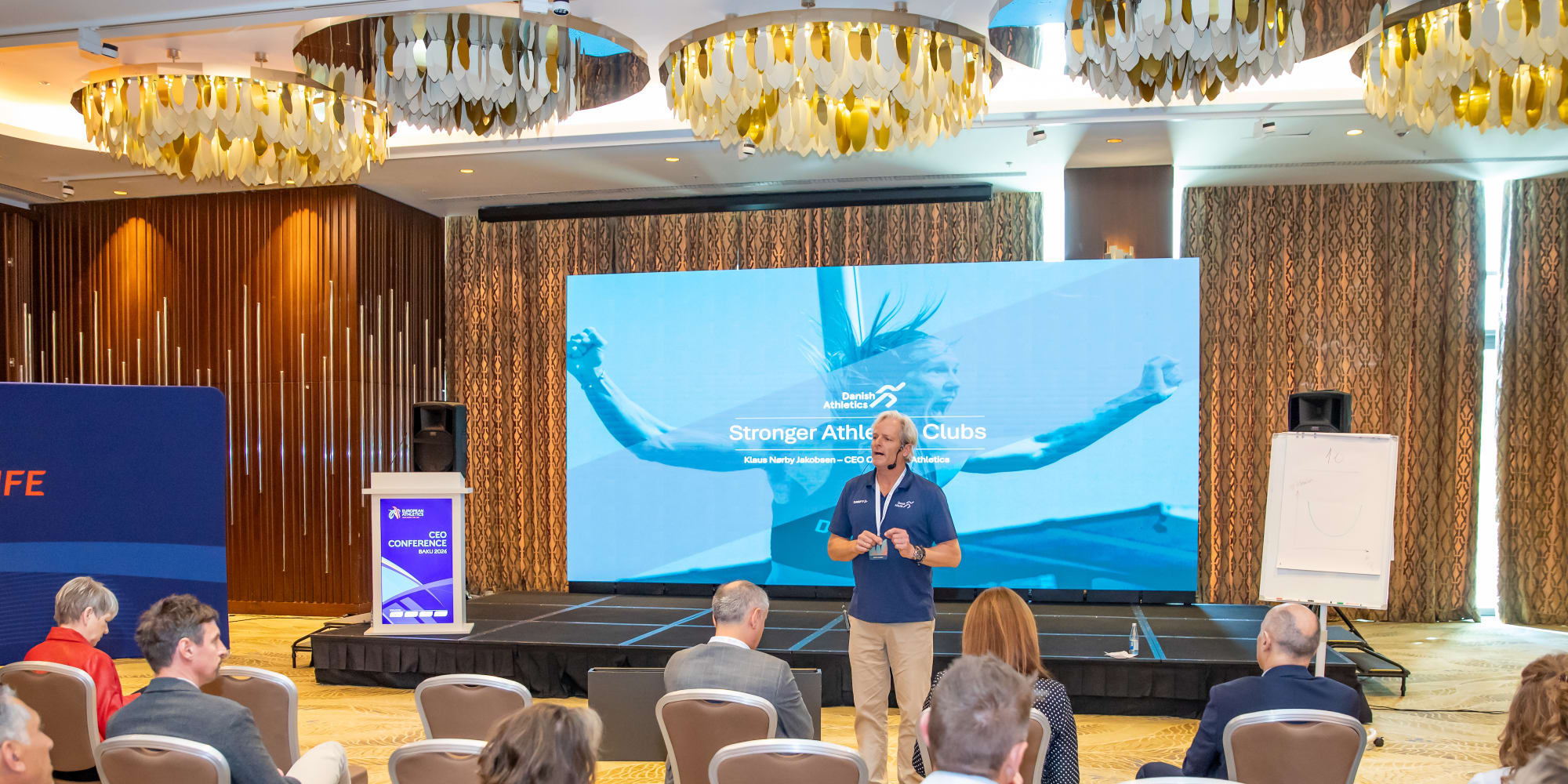
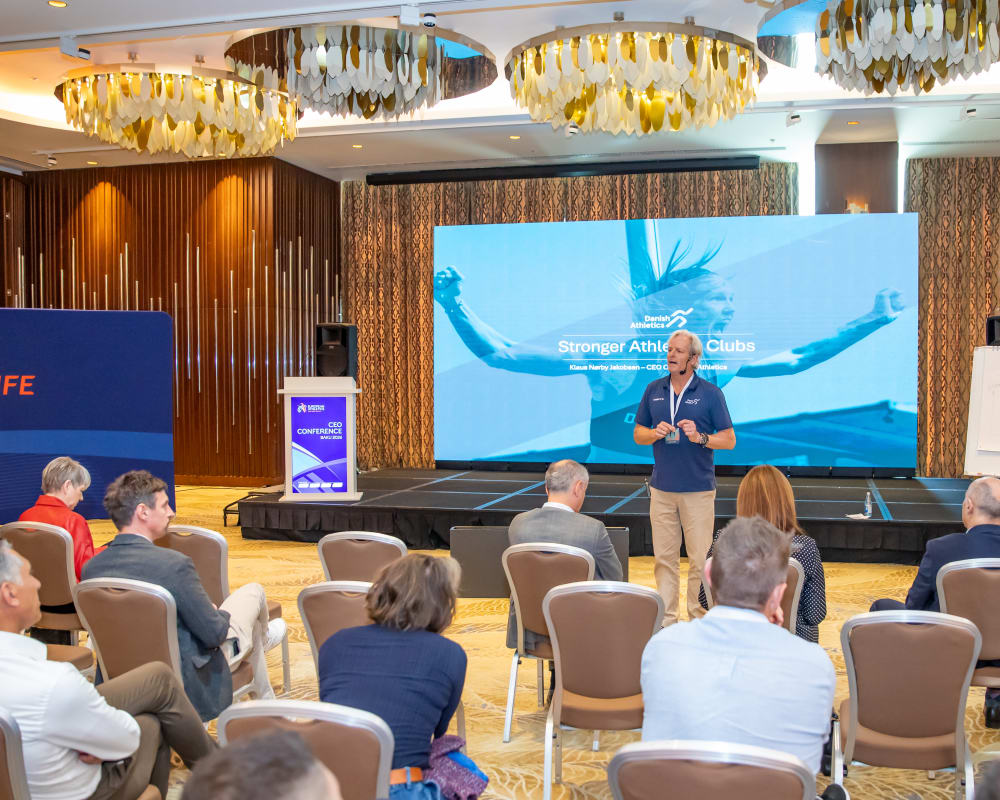
When Danish Athletics CEO Klaus Nørby Jakobsen addressed the European Athletics CEO Conference in Baku earlier this year, his message was straightforward: if small federations want to thrive on tight resources, they must abandon administrative isolation, share operational burdens and take the sport directly to where children and young leaders actually are.
The shared services model
For mid-sized clubs, the pressure to professionalise often clashes with financial reality. Reluctant to risk limited budgets on full-time salaries, many rely entirely on volunteer goodwill. When key volunteers step down, institutional memory is lost and momentum stalls. To break that cycle, Danish Athletics launched its shared services model (Fælleshus) under the operating principle: “Share the resources, not the hassle”.
Under this structure, the national federation centrally manages employment contracts, payroll, and administrative compliance, while multiple neighbouring clubs pool funds to share a dedicated, professional club development consultant.
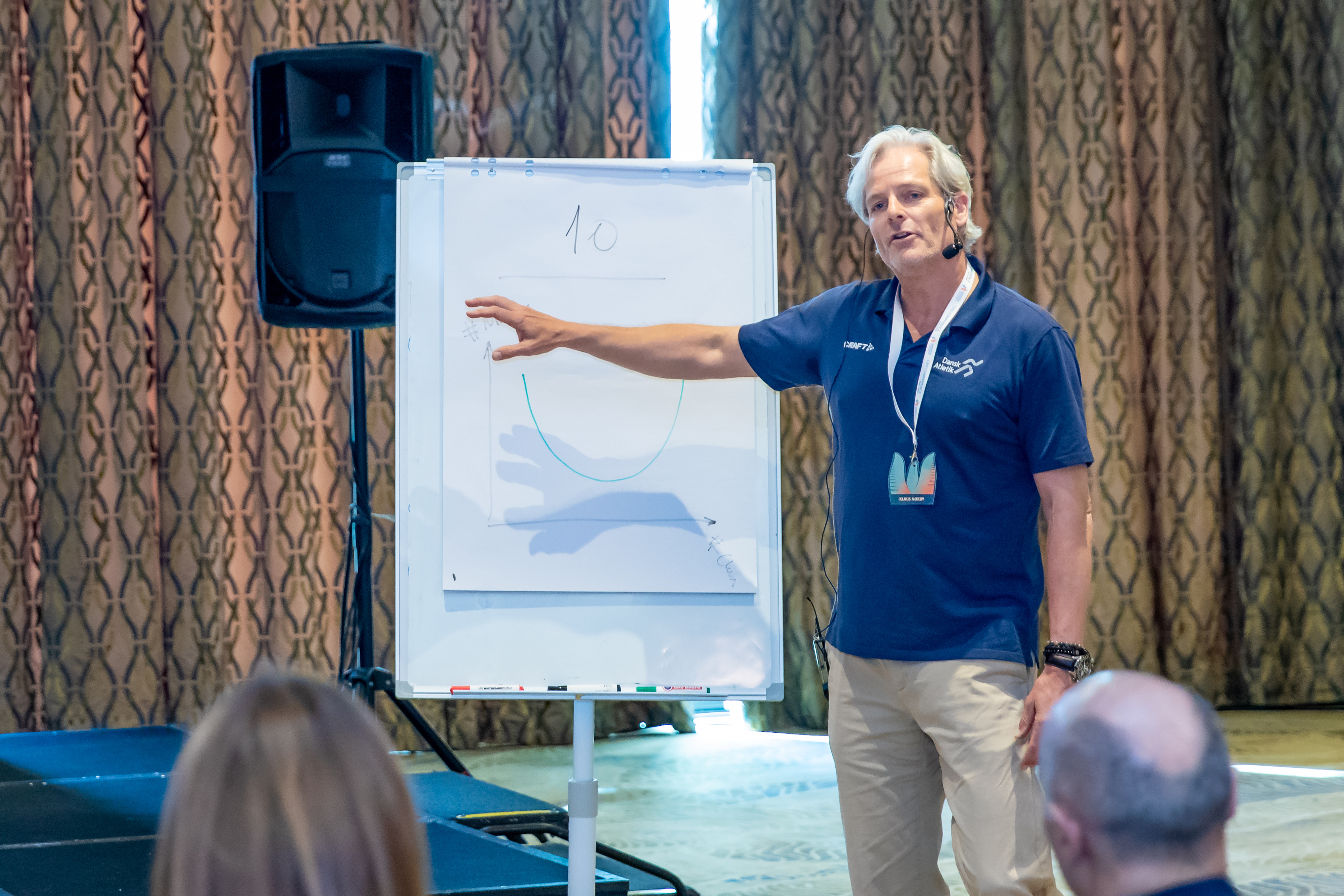
“Mid-range clubs often hesitate to gamble with their budgets, so they go the volunteer route rather than hiring staff,” says Jakobsen. “To give them an incentive to professionalise, we say: why don’t we share the resources, and we at the federation take all the hassle and administrative work? Two or three clubs in the same local vicinity combine forces, and they gain continuous professional capacity without the overhead burden.”
The same collaborative philosophy drives Project 120, where the federation funds expert coaches to deliver shared training days across neighbouring clubs, breaking down traditional rivalries in favour of collective capability.
From kindergarten to boardroom
Modernising leadership also means addressing the risk of shrinking participation pipelines. In Denmark, the federation’s 2026-2029 strategic roadmap tackles this challenge at both ends of the age spectrum:
-
Early engagement (ages 3-6): Moving athletics beyond traditional stadium confines, the Athletics Day at the Zoo programme introduces fundamental movement skills – running, jumping and throwing – to kindergartens through animal-inspired play and storytelling. The low-barrier initiative has already delivered significant membership growth in the under-six category.
-
Youth empowerment (ages 16-35): The federation’s Young Leadership Academy and cross-sport conferences provide structured governance training, peer networks and authentic decision-making responsibilities within club committees and boards.
“When you introduce concepts for youngsters, you need relatable figures,” says Jakobsen. “Having an 18-year-old youth leader running a session gives a child someone to mirror who isn't a parent or an older official. From there, we build the staircase, from participant to volunteer, to coach, to administrator. If we don't build that clear career path, we lose our young people to other sports and commercial businesses.”
A living blueprint for Birmingham and beyond
That generational handover was mirrored in real time at the Birmingham 2026 European Athletics Championships, where the Future Leaders Forum brought 65 emerging administrators from 44 federations together to present concrete project blueprints directly to the European Athletics Executive Board.
For Jakobsen, seeing youth development and operational responsibility converge is essential for the future health of European track and field.
“The biggest lesson for any small federation is to reach out,” he says. “Reach out to other sports and neighbouring federations, because we are all facing the exact same obstacles in governance and club retention. The more we share knowledge, innovate our formats and take athletics out into schools and public spaces, the more sustainable we become.”
Governance and risk management in October
Denmark’s pragmatic approach illustrates how modern leadership and risk mitigation must operate in practice: as living, everyday operational strategies rather than abstract boardroom policies.
That theme will also feature at the European Athletics Convention 2026 on 23 October, during the high-level Governance Workshop, “Preparing for Challenges: Integrating Risk into Strategic Decision Making”. The session will provide Member Federation leaders with practical frameworks to identify, assess and manage operational, financial and reputational risks in an increasingly volatile global sporting environment.