



Athletics has no shortage of young people with ideas. The challenge is making sure they have the chance to develop them, take responsibility and play a meaningful role in the sport. Following the 20th anniversary Future Leaders Forum in Birmingham, participant Kathrin Furrer and facilitator team chair Lex Damit discuss what that looks like in practice.
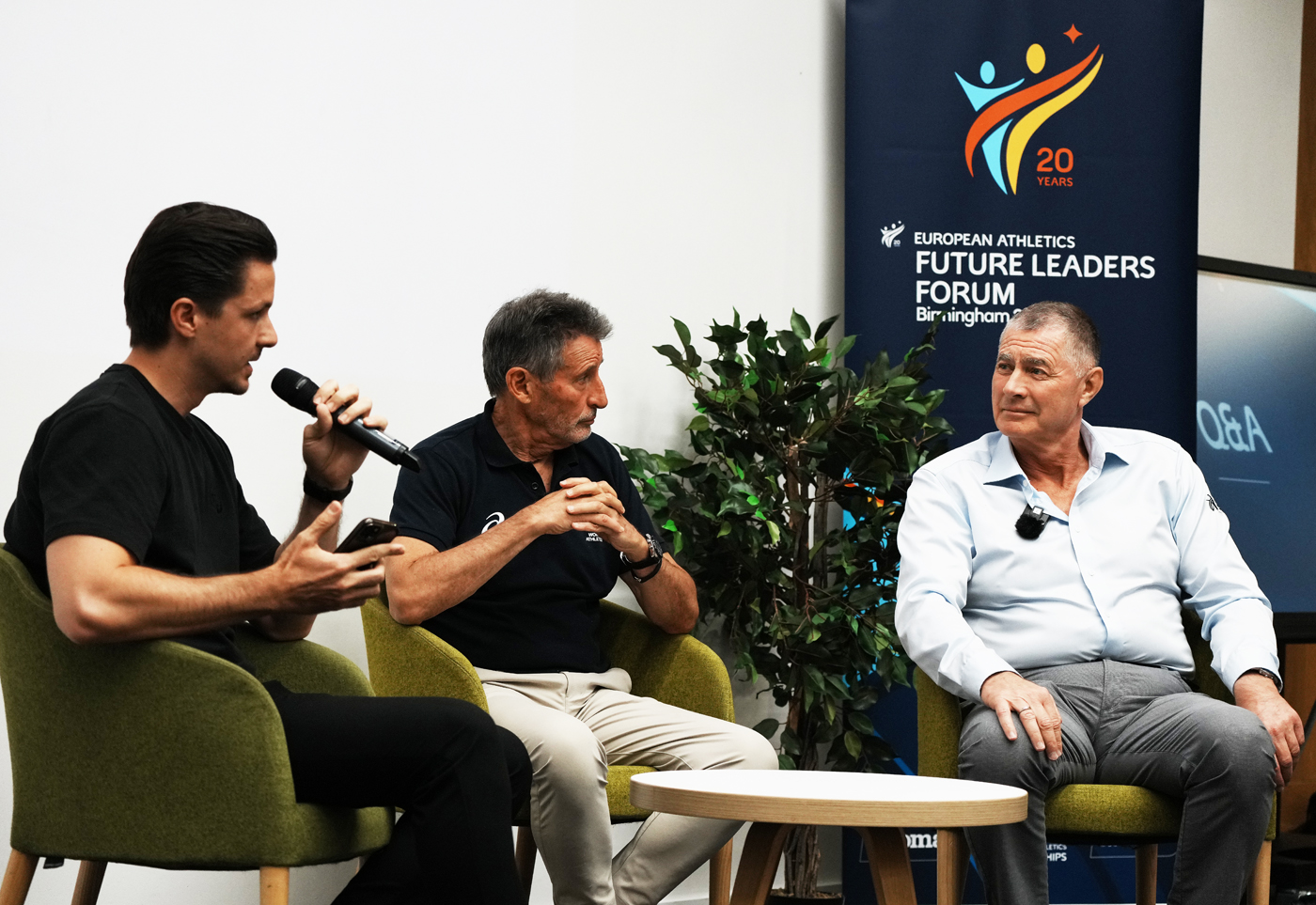
The Forum gave participants opportunities to engage directly with some of the people already leading the sport. One of the key sessions brought the full group together with members of the European Athletics Executive Board for an open question-and-answer session, with discussions ranging from artificial intelligence and risk management to the commercial sustainability of athletics.
When Lex Damit attended the European Athletics Future Leaders Forum in Munich in 2022, he thought his future would be in sports science.
Then 22 and studying sports technology, the Luxembourg athlete was interested in biomechanics and data, and in helping athletes improve performance. The Forum showed him a different side of the sport.
“It opened my eyes to what the sport is actually built upon,” he says. “As an athlete, you see your coach and maybe some sports scientists, but you don’t really see how the sport works behind the scenes.”
Lex became increasingly interested in the work that sits behind competition – the people, structures and organisations that keep athletics running.
Back in Luxembourg, he asked for a meeting with his federation president and prepared an 11-page document setting out some of the things he thought could be improved. He then began working on some of those ideas himself, initially on a voluntary basis.
His role grew from there. Today, he works full-time for the Luxembourg Athletics Federation as its COO.
“It sounds a bit dramatic, but it really did change my life,” he says. “It pointed me in the direction of where my passion was and what I wanted to do.”
Four years later, Lex returned to the Future Leaders Forum in Birmingham as chair of the facilitator team.
His own experience highlights one of the key questions that the programme aims to address: once young people show that they care about the future of athletics, how do federations help them move from having ideas to taking on real responsibility?
More than managing
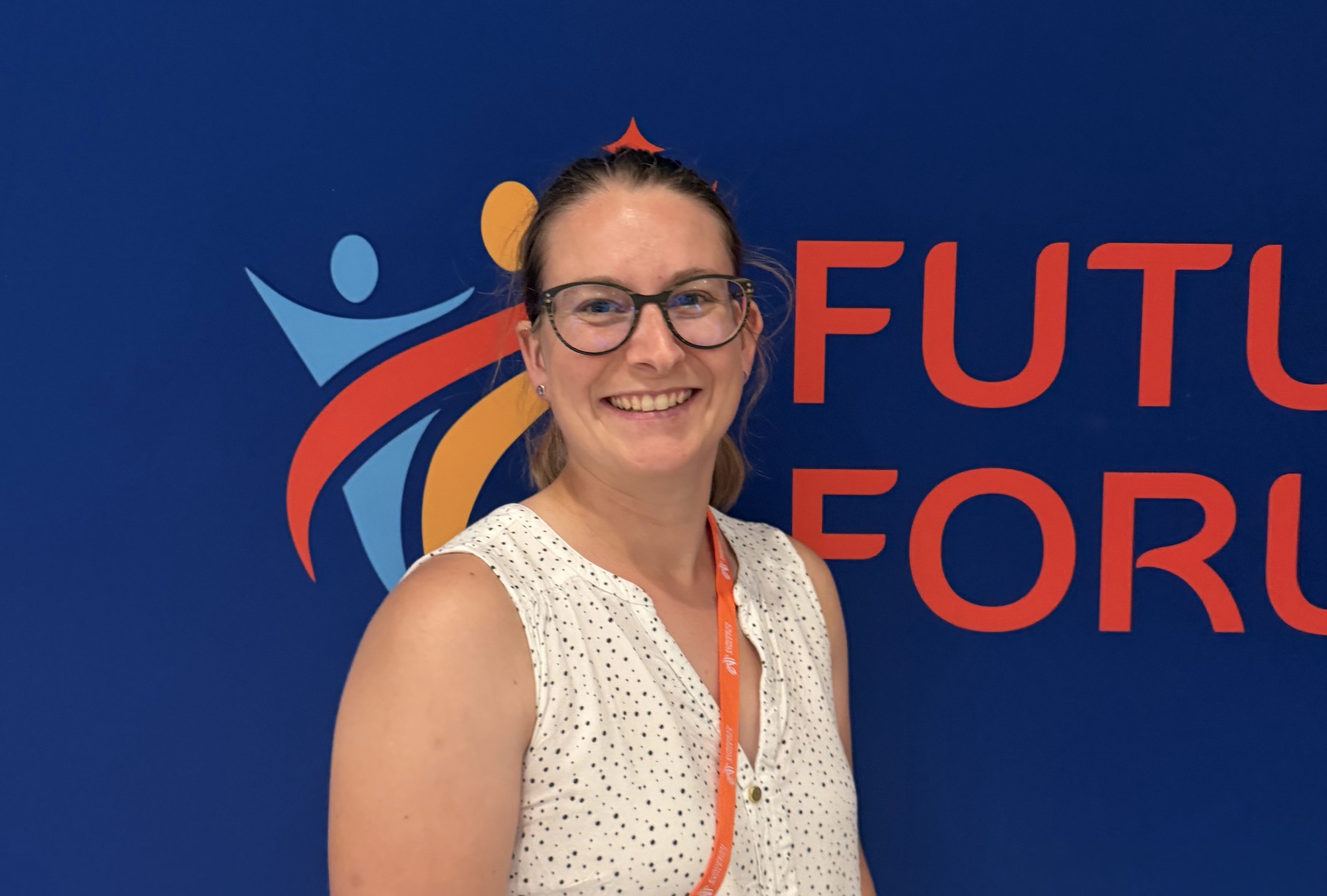
Kathrin Furrer arrived in Birmingham from a different starting point.
One of 63 participants representing 45 European Athletics Member Federations, she was already Head of Finance at Swiss Athletics and responsible for leading a team of three.
Before the Forum, she says, she tended to think of leadership mainly in terms of managing people and getting the day-to-day work done.
“The Forum opened my perspective that leading means much more than just guiding people to get through their work,” she says. “It is also about challenging things and inspiring the people who work for you or work with you.”
For Kathrin, that broader view of leadership was one of the main things she took away from Birmingham.
Lex is cautious about presenting the issue as a simple contrast between one generation of leaders and the next. There are effective leaders with very different approaches in every generation.
What he would like to see, though, is a leadership culture that is more open to new ideas, more willing to listen and more comfortable admitting when something has not worked.
That matters as athletics responds to changes in technology and in the way people engage with sport.
“You have to be open to new things,” he says. “With AI and all these new technologies coming in, if we miss that era, it can have negative effects because other sports might take them up in different ways. It is also a race with other sports – how do we keep athletics relevant?”
Young people can contribute to that conversation precisely because they will be part of the next phase of the sport.
Lex believes they need to listen and learn, but also be prepared to challenge established ways of doing things and put forward their own ideas without being held back by their age.
Learning by doing
That thinking influenced the way the Birmingham Forum was designed.
The programme was not intended to feel like a traditional leadership course. Participants were instead asked to work quickly with people from different countries, federations and areas of athletics.
A major part of the week was the Legacy Lab, where small groups developed responses to challenges facing the sport and presented their ideas to the European Athletics Executive Board and Member Federation leaders.
Kathrin's group focused on collaboration between federations.
Their starting point was the fact that Member Federations across Europe vary considerably in size, structure and resources. Rather than each trying to solve the same problems independently, the group looked at how federations could share expertise more easily.
Their proposal was a platform where federations could identify areas in which they had particular knowledge or successful projects, as well as areas where they needed support. The idea was then to match potential partners and encourage greater cooperation.
For Kathrin, the process of getting to that idea was as useful as the final proposal.
Her group included people from different countries and different parts of the sport, including federation employees, athletes and club coaches.
“At the beginning we were very lost,” she says. “We had different backgrounds and different interests. Over the four days, it was about getting to know each other and understanding the strengths and weaknesses of the different team members, then using them so that in the end we had an outcome.”
From the facilitator side, Lex says some of that pressure was deliberate.
Participants had limited time and had to make decisions as a group, while facilitators were there to guide them without simply providing the answers.
It gave them experience of some of the situations they are likely to face in their working lives, including different opinions, limited time and resources, and the need to find a way forward together.
Giving people a chance
For Lex, developing future leaders depends on both the individual and the organisation.
Young people who want to make a difference need to be proactive, he says. They have to put themselves forward, seek opportunities and be willing to explain what they think should change.
His own experience after Munich is an obvious example, but that only works if the federation is prepared to listen.
“If I had just been sent back with, ‘No, we don’t have time to do this’, I would never have been where I am now,” he says. “Federations need to give people the opportunity to do what they feel passionate about, even if it isn’t their number one priority.”
Kathrin has had a similar experience at Swiss Athletics.
She started as part of a project team before being given the opportunity to become a project manager and, later, Head of Finance. She believes the support of senior colleagues was crucial.
“If I had needed to apply for this job, I would never have got it because I did not have the experience,” she says. “But because the CEO knew who I was and how I worked, I got the opportunity.
“You need to have someone who opens the doors for you. If you have a lot of ideas and you always get refused, at some point you just stop.”
That is an important part of developing younger leaders. Asking for their views is useful, but at some point they also need the chance to take responsibility and show what they can do.
Building connections across Europe
The Forum also gives participants something that can be difficult to build within their own federation: a network across European athletics.
Birmingham brought together people from large federations with significant professional structures and others from countries where only one person may be employed and much of the work is carried out by volunteers.
For Kathrin, that made clear that there is no single leadership model that works everywhere. Expectations have to take account of the resources and circumstances of each federation.
At the same time, many of the underlying challenges are familiar across borders.
“We all have similar problems, just on different levels,” Lex says.
That creates opportunities for federations to share ideas and learn from one another, particularly in areas such as development, education and volunteering where there is little reason to work in isolation.
It also allows younger people to build relationships with counterparts in other countries much earlier in their careers.
Lex believes the next step is to keep those relationships going after the Forum ends.
The facilitator team is exploring ways to maintain a Future Leaders community between editions so former participants can exchange ideas, ask for help, collaborate on projects and potentially share job opportunities.
Twenty years after the programme began, former participants are already moving into senior positions as presidents, board members and federation staff.
The challenge now is not only to identify future leaders, but to keep supporting them as they take on more responsibility.
For Kathrin and Lex, much of that comes down to relatively simple things, whether it's listening to young people, giving them opportunities or simply making sure they have people around them who can help them develop.