



As the countdown continues towards the 2026 European Athletics Championships, we look back at another unforgettable moment from the history of the championships.
This time, we rewind to Split 1990, where France’s men’s 4x100m team produced a performance which combined speed, trust and technical brilliance to create one of the greatest relay races ever seen.
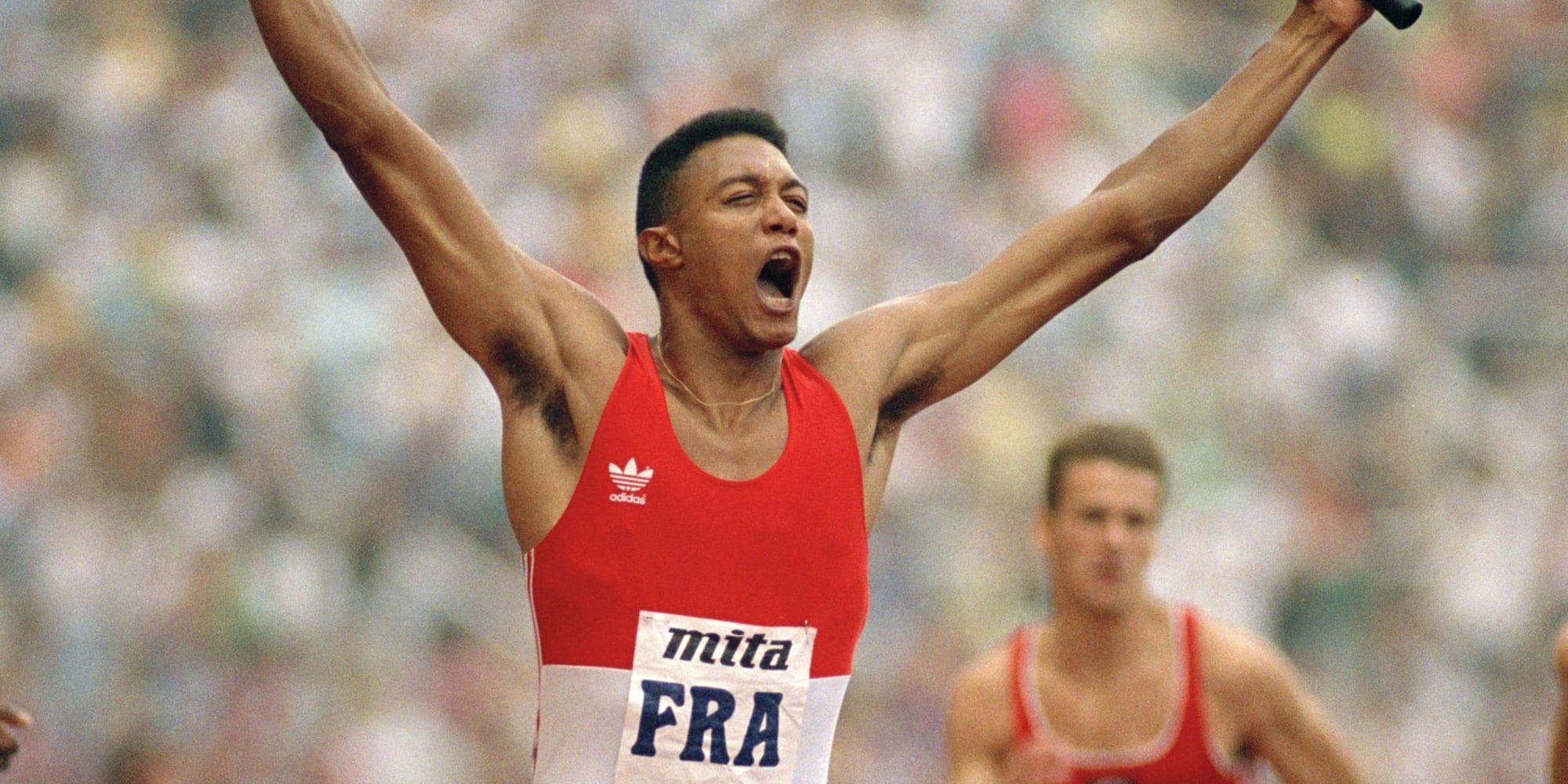
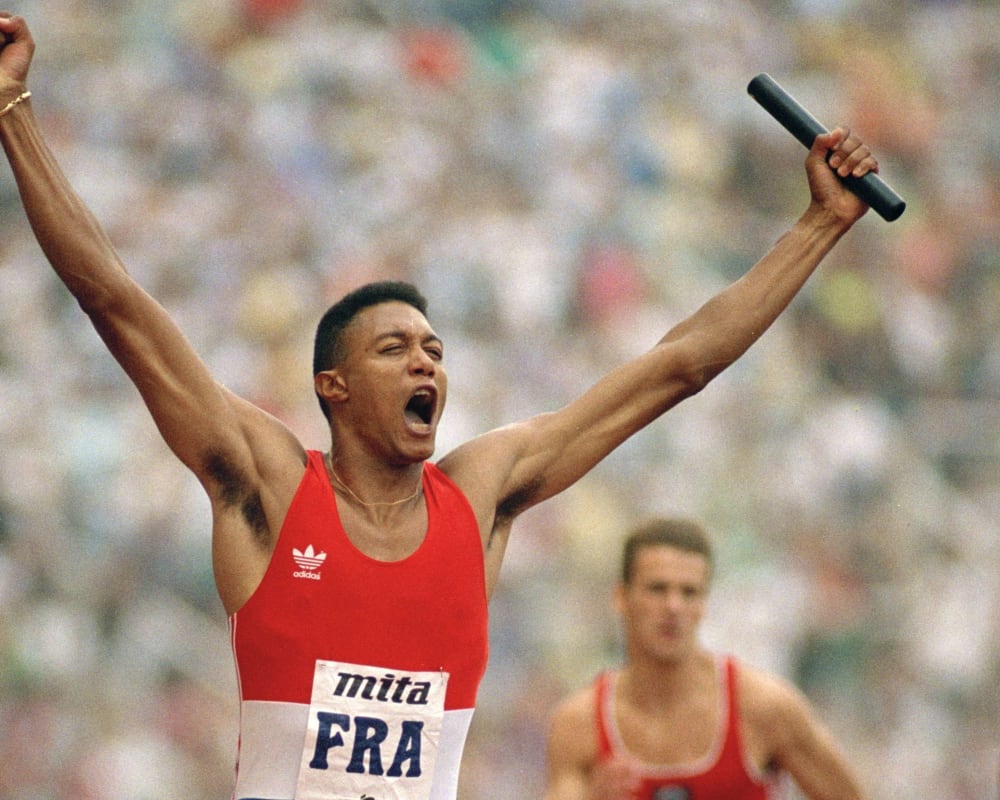
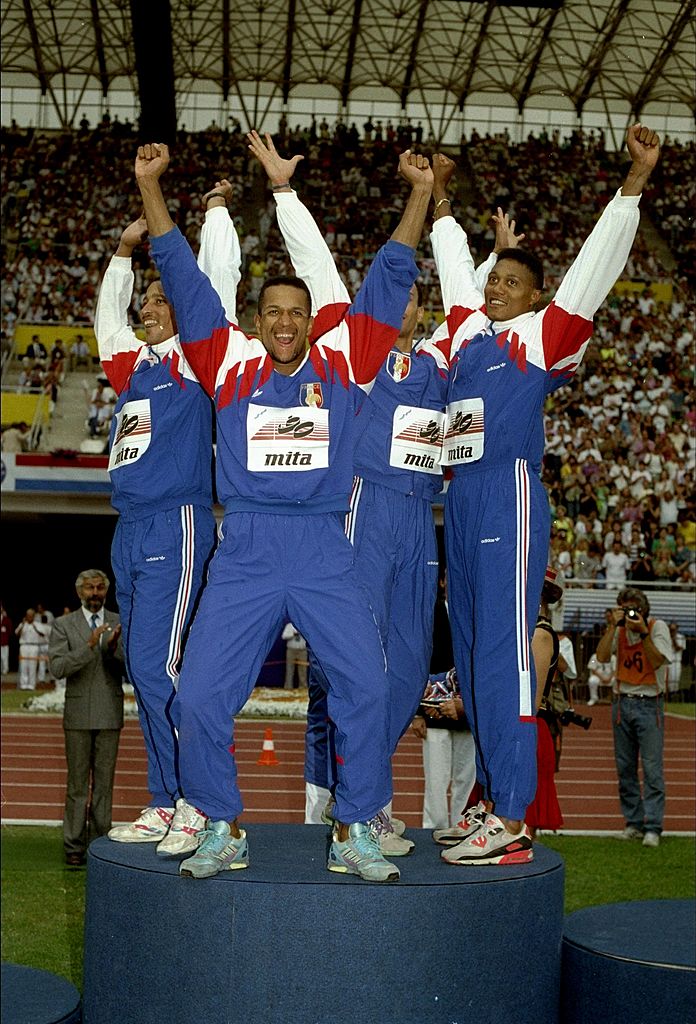
On a warm evening at the Poljud Stadium, Max Morinière, Daniel Sangouma, Jean-Charles Trouabal and Bruno Marie-Rose ran 37.79 to win European gold — and in doing so became the first European quartet to set a world record in the men’s 4x100m relay.
The background
By the time the 1990 European Athletics Championships arrived, France had quietly built one of the most formidable relay squads in the world.
At a time when sprinting was dominated by the United States, French success was founded not on having the fastest individual 100m runners, but on the principles that define great relay teams: consistency, cohesion and outstanding baton exchanges.
The foundations had been laid two years earlier at the Seoul 1988 Olympic Games, where France claimed bronze behind the Soviet Union and Great Britain & Northern Ireland. Morinière and Marie-Rose were part of that team and brought valuable championship experience into the next Olympic cycle.
They were joined by two outstanding additions. Sangouma had developed into one of Europe’s premier sprinters, winning silver in the individual 100m earlier at Split 1990, while Trouabal added world-class bend running and relay expertise.
But in Great Britain they had a particularly formidable opponent. Their foursome included 100m champion Linford Christie, 200m champion John Regis, 100m finalist Darren Braithwaite and Commonwealth 200m champion Marcus Adam.
Nonetheless, the French quartet arrived in Yugoslavia with quiet confidence, but few expected them to win gold, let alone set a new world record.
Over the course of one lap of the track, they were about to change that.
What happened?
Lining up in lane five between the two nations who had stood above them on the Olympic podium two years earlier, France started strongly like a team operating at the limit of what was possible.
Morinière powered around the first bend before delivering a smooth first changeover to Sangouma.
The race changed dramatically on the back straight.
Sangouma produced a devastating second leg of which was estimated at around 8.90 seconds — one of the quickest flying relay splits ever recorded at that point — and moved France from medal contenders into world record territory.
Trouabal maintained the momentum on the third leg. Running the curve with precision, he clocked approximately 9.21 seconds before sending Marie-Rose away for the anchor leg.
The final 100 metres became a race against history.
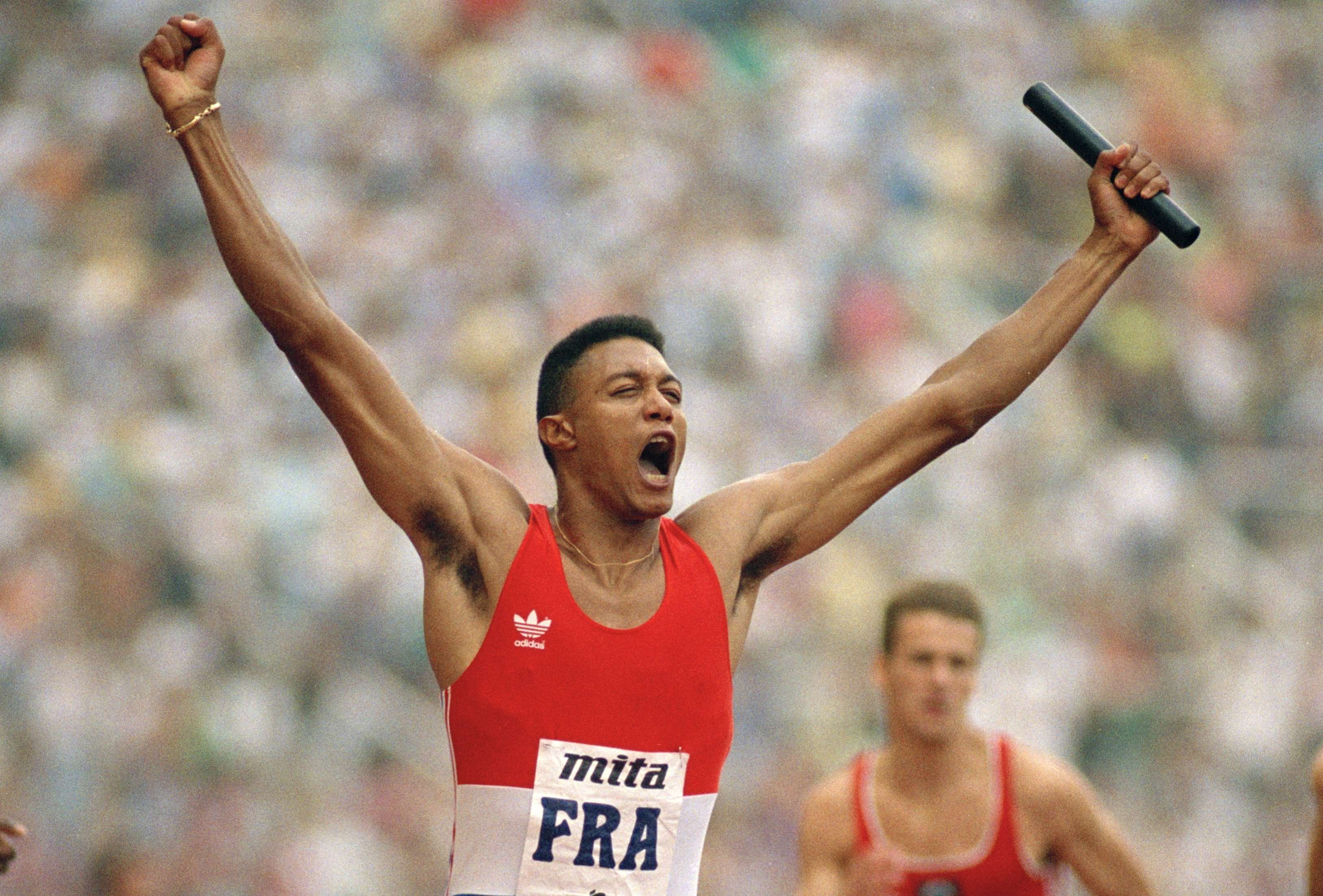
Marie-Rose, already an Olympic relay medallist and one of the most experienced members of the team, held his form brilliantly down the home straight. His estimated 9.10-second anchor leg brought France across the line ahead of a world-class field.
The clock initially showed 37.80.
Moments later, the official time appeared: 37.79.
A new world record.
France had become European champions and the fastest relay nation in history.
The aftermath
France’s world record stood for almost exactly one year before the United States reclaimed the mark at the 1991 World Athletics Championships in Tokyo.
But the French quartet proved Split was no one-off.
One year later in Tokyo, Morinière, Sangouma, Trouabal and Marie-Rose reunited and produced another outstanding performance, winning world silver behind a United States team inspired by Carl Lewis and Leroy Burrell. The Americans equalled France’s former world record of 37.79 in the heats before lowering it to 37.50 in the final.
The French record-breakers also left a lasting legacy individually.
Marie-Rose retired as one of France’s most decorated relay runners, having won Olympic, world and European medals. Sangouma remained among Europe’s leading sprinters of his generation, winning European indoor 200m gold in 1994.
He and Trouabal were joined by Hermann Lomba and Éric Perrot as France defended their European 4x100m title in Helsinki in 1994.
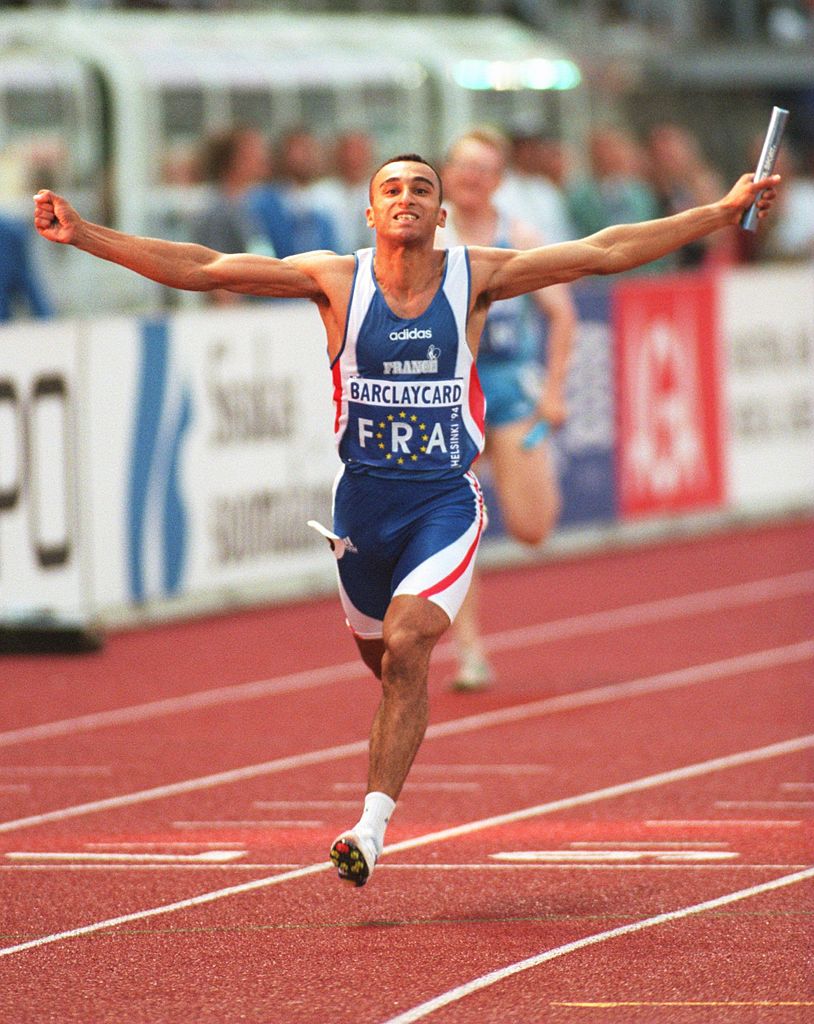
Meanwhile, their European record survived for more than a decade and their performance in Split remains a landmark moment in the evolution of relay running.
More than 35 years later, the achievement of Morinière, Sangouma, Trouabal and Marie-Rose remains proof that the 4x100m is not simply about four fast sprinters.
It is about timing. It is about trust.
And in Split in 1990, France produced 37.79 seconds of perfection.