



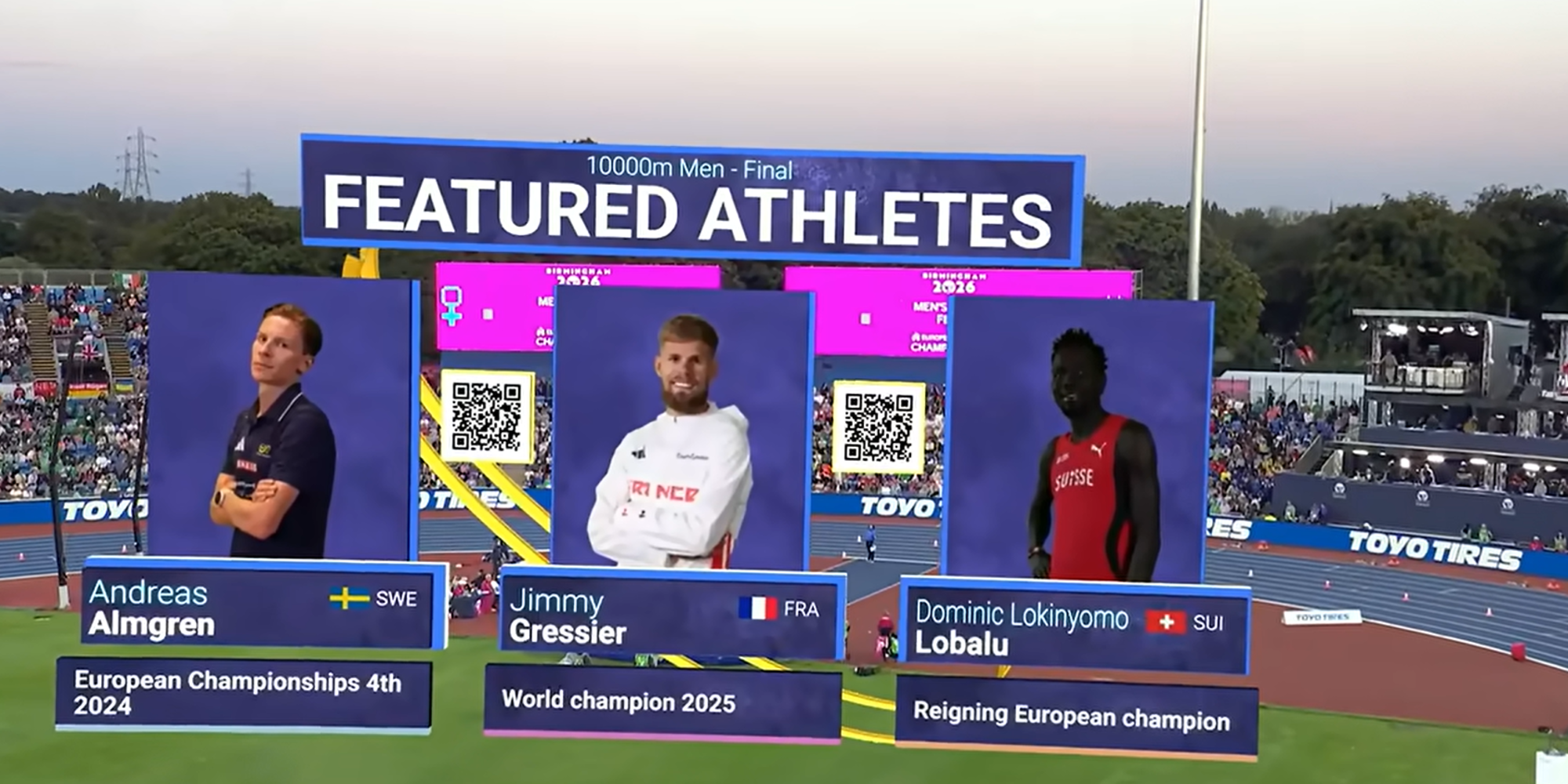
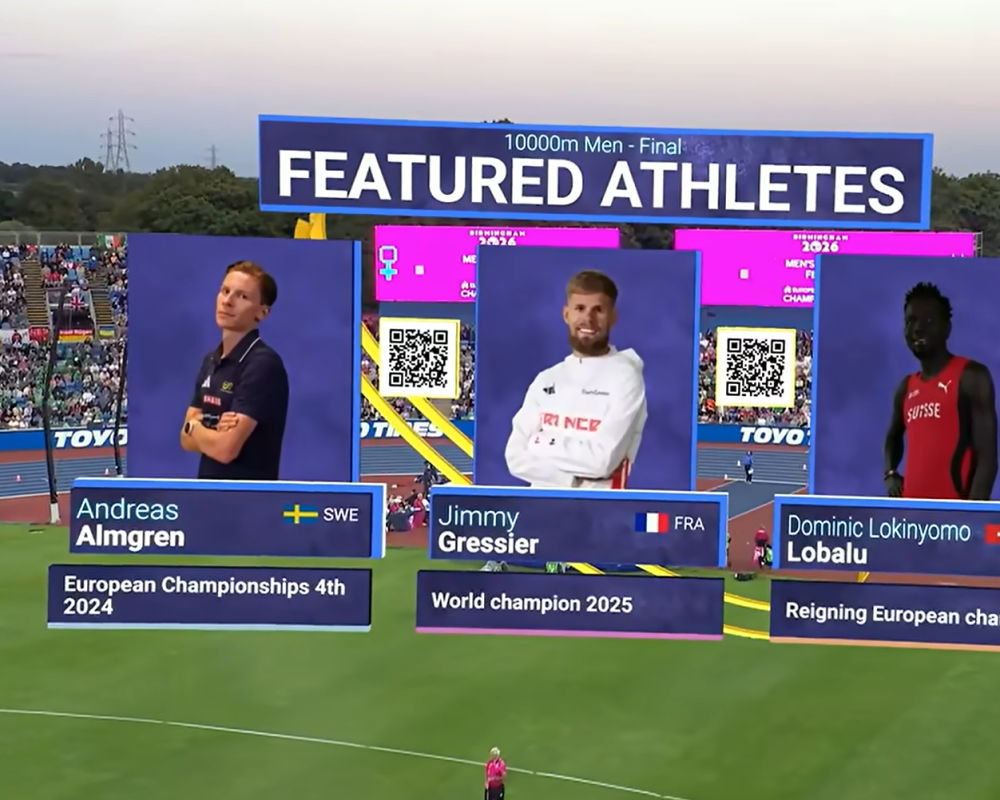

When viewers tuned in to the Birmingham 2026 European Athletics Championships, they were treated to a broadcast experience unlike any previous edition in European sport.
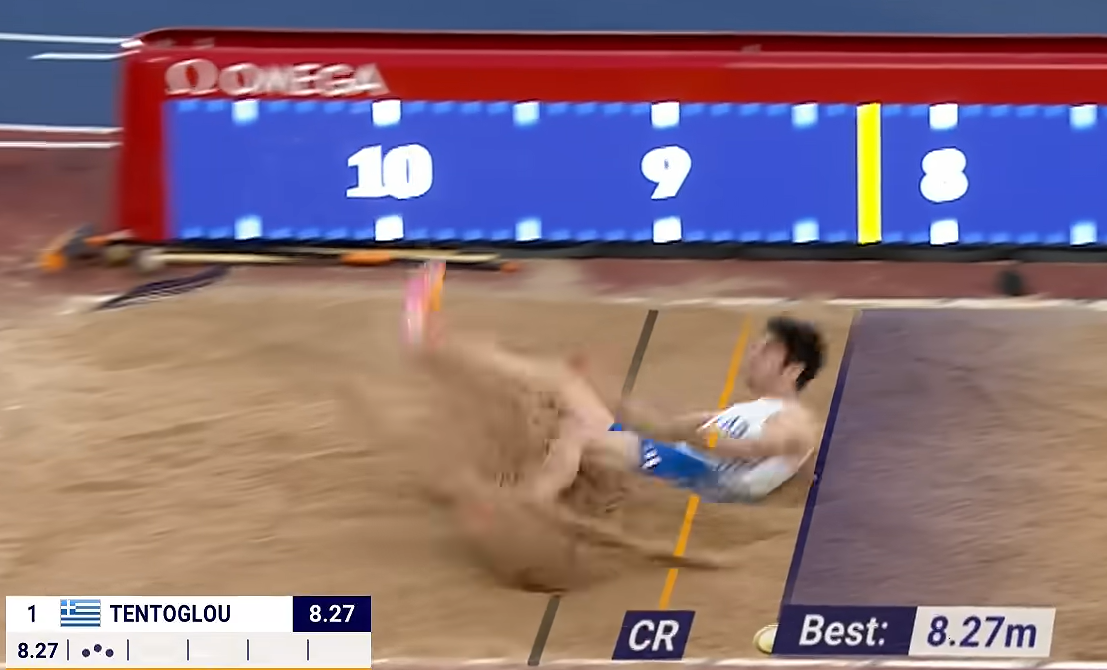
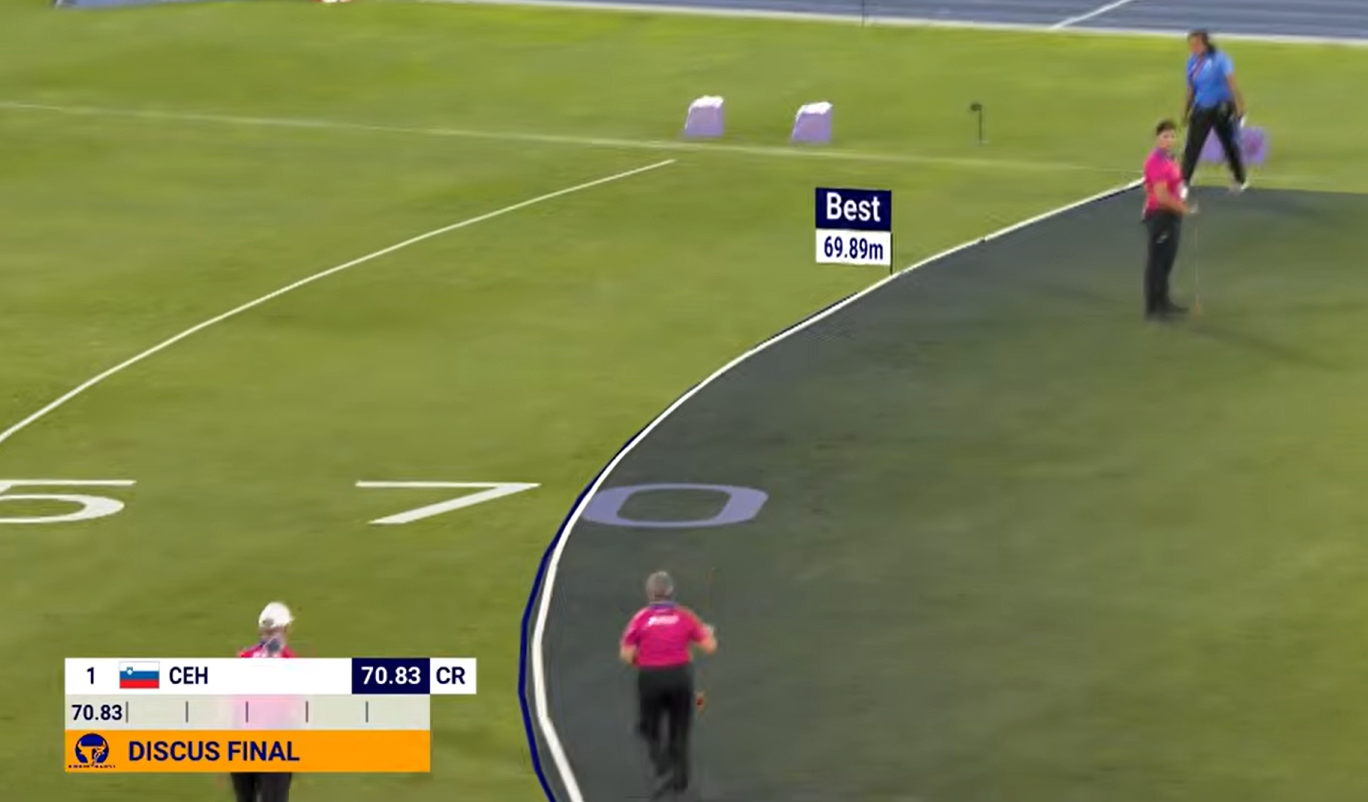
Floating virtual record lines, 3D athlete identification graphics on the track and live speed overlays seamlessly transformed the television screen into an interactive canvas.
Behind that polished output lies a high-stakes technical gamble, one that brought together a ten-person specialist team, custom-ordered hardware and months of shadow testing to deliver a European broadcasting first.
From Niche Trial to Championship Stage
Augmented Reality (AR) in sports broadcasting is not entirely new, but its application in European track and field represents a massive leap forward. Birmingham marked the official championship debut of real-time AR data overlays on European television.
Unlike traditional static graphics generated after an event, AR requires artificial elements to be inserted into live camera feeds in real time, moving dynamically with the camera angles and athlete motion.
While a photo-finish camera can be operated by a single master technician under the scrutiny of an international official, delivering live AR is an intricately layered operation.
A dedicated team of ten specialists worked on-site in Birmingham, together with the knowledge and immense experience of the Host Broadcaster, managing a complex chain of precision-calibrated hardware where every single link was critical.
Working against the clock
Unlike standard timing equipment, this AR setup could not be tested remotely. The hardware had to be ordered to exact, bespoke specifications, brought to the venue and built on-site.
The team spent two weeks in on-site preparation, after three months of scope definition, hardware selection and graphic design working against the clock to align camera tracking, software layers and live data feeds.
“With AR, no single person understands every individual piece of the jigsaw, everyone owns their specific element,” said Nicolas Launois, European Athletics Technology Lead.
“It requires immense coordination. If you change just one requirement or one setting in the chain, the whole setup falls apart. The team worked straight through to Sunday night just to get the system ready for live competition.”
Even then, the team operated in ‘shadow mode’ during early sessions, withholding the signal from the main broadcast feed until the visual fidelity met absolute top-tier broadcasting standards.
Magnifying the Story on Screen
The primary goal of AR is not technical showmanship, but editorial clarity. Live track data such as instant acceleration, race gaps and speed curves can be difficult for viewers to contextualise from a wide camera angle.
Floating AR graphics anchor that data directly on to the track, making split-second tactical moves immediately obvious to audiences at home.
Achieving this seamless blend of data and picture is the result of a year-long collaboration between European Athletics, the Host Broadcaster and OMEGA, European Athletics’ timing and results partner, also in charge of delivering on-screen graphics.
Every weekly planning session across the year focused on the finest details: how animations enter the frame, when data pops up and how graphics enhance the narrative without cluttering the action.
The result is a modernised broadcast identity for athletics, one that presents human performance through a fresh, dynamic lens for a new generation of viewers.