



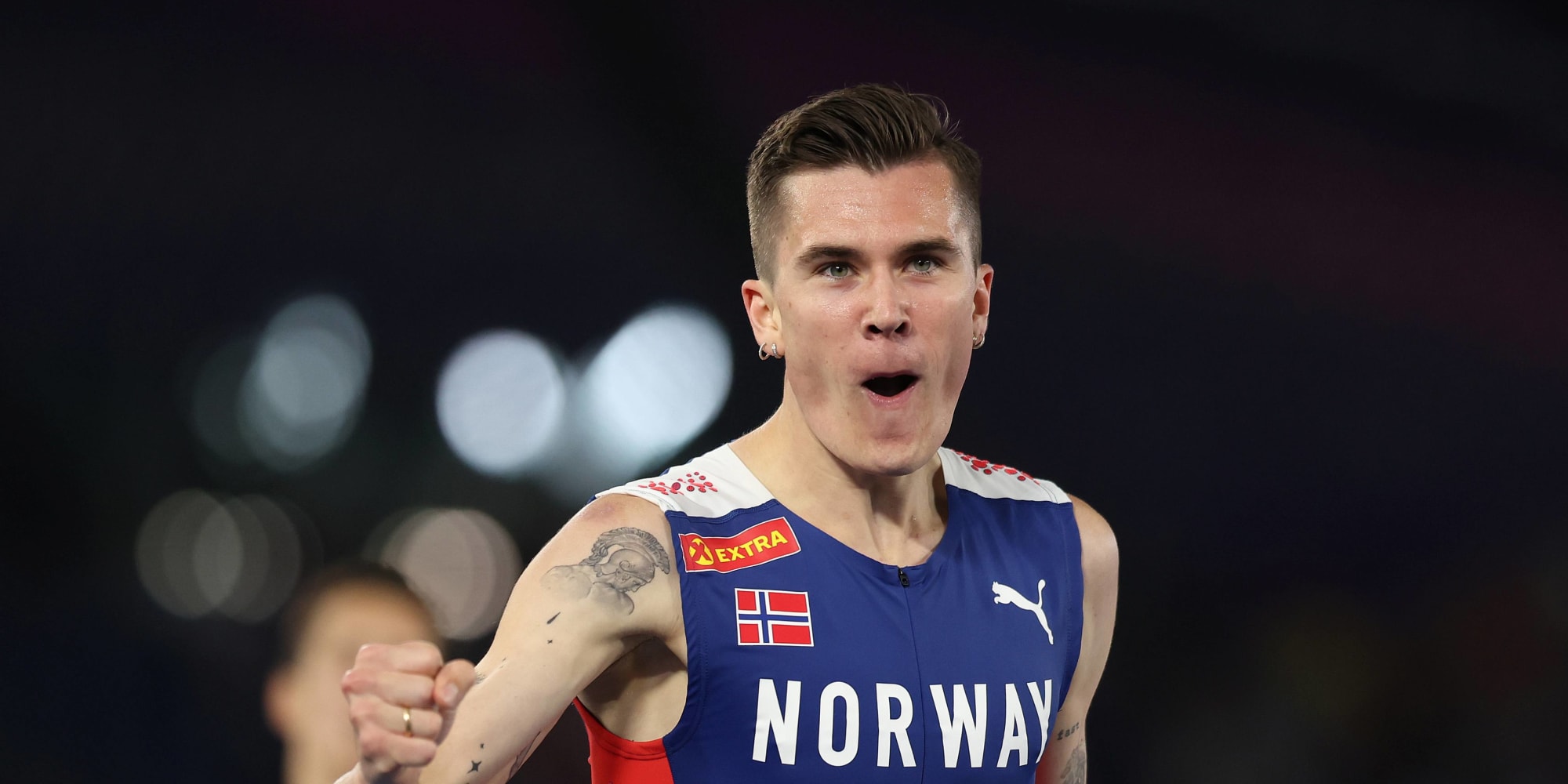
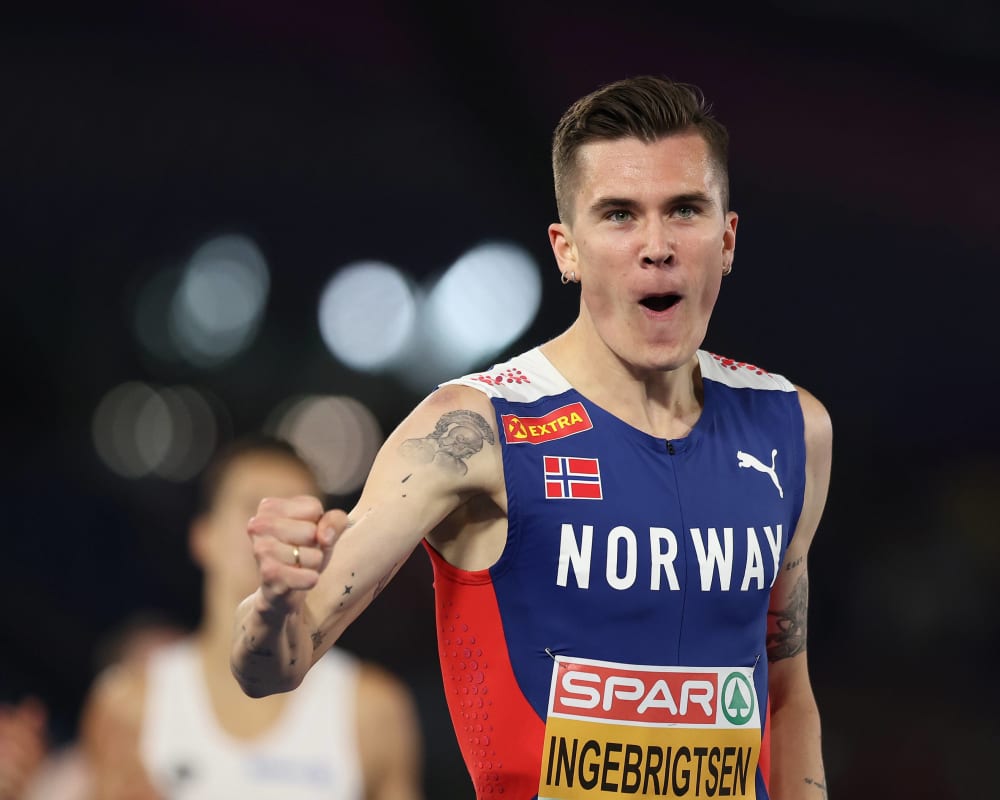

Olympic and European 5000m champion Jakob Ingebrigtsen is unlikely to return to competition until July at the earliest, according to his manager.
Speaking with VG, Daniel Wessfeldt said: “You want to reach a certain level when you compete. That’s why there will be no races in May and June—that’s pretty clear. There will be nothing at the Bislett Games (10 June). I don’t know when he’ll be ready after that either.
“It’s about how training goes at the end of April and into May. It could progress quickly and he could regain fitness, and then it might be possible to compete in the second part of the season.”
Second part of summer season targetted
The Norwegian is returning to training after surgery on a troublesome Achilles tendon. The injury effectively ruled him out of contention last summer, despite a brave return at the World Athletics Championships in Tokyo, where he was uncharacteristically eliminated in the 1500m heats and placed 10th in the 5000m final.
“It’s the second part of the season that we have to believe in and hope for,” said Wessfeldt. “It will be too early for competitions in June anyway. It’s not just about being healthy—he also has to reach a certain level to compete against the best.
“He cannot risk anything at the start of the season. The signs are very positive when you see how relaxed Jakob is when he is not in pain.
“He has now had an operation that went well, but it takes time to build up the volume of training required to reach that level. If everything continues to go well, he could be very strong in the latter part of the season.”
Another European double bid?
Ingebrigtsen has won the 1500m/5000m double at the last three European Athletics Championships—Berlin 2018, Munich 2022 and Rome 2024. Typically a prolific championship racer, if he regains full fitness he is likely to target the same double at Birmingham 2026 from 10–16 August.
There are also optimistic updates from Norway’s national team doctor, Ove Talsnes, who spoke with NRK about Ingebrigtsen’s rehabilitation.
“Patience is demanding, but he is doing the work. There have been no relapses, and the training has progressed according to plan,” he said.
“He’s been really good at keeping a cool head, being patient and not rushing his return. It’s only after several weeks of high-volume training that he can be back to full capacity.
“The training he is doing now must increase in volume, rhythm and intensity—and it must be sustained over time. At the international level he wants to return to, everyone is healthy and well-prepared. It will take time for Jakob.”