


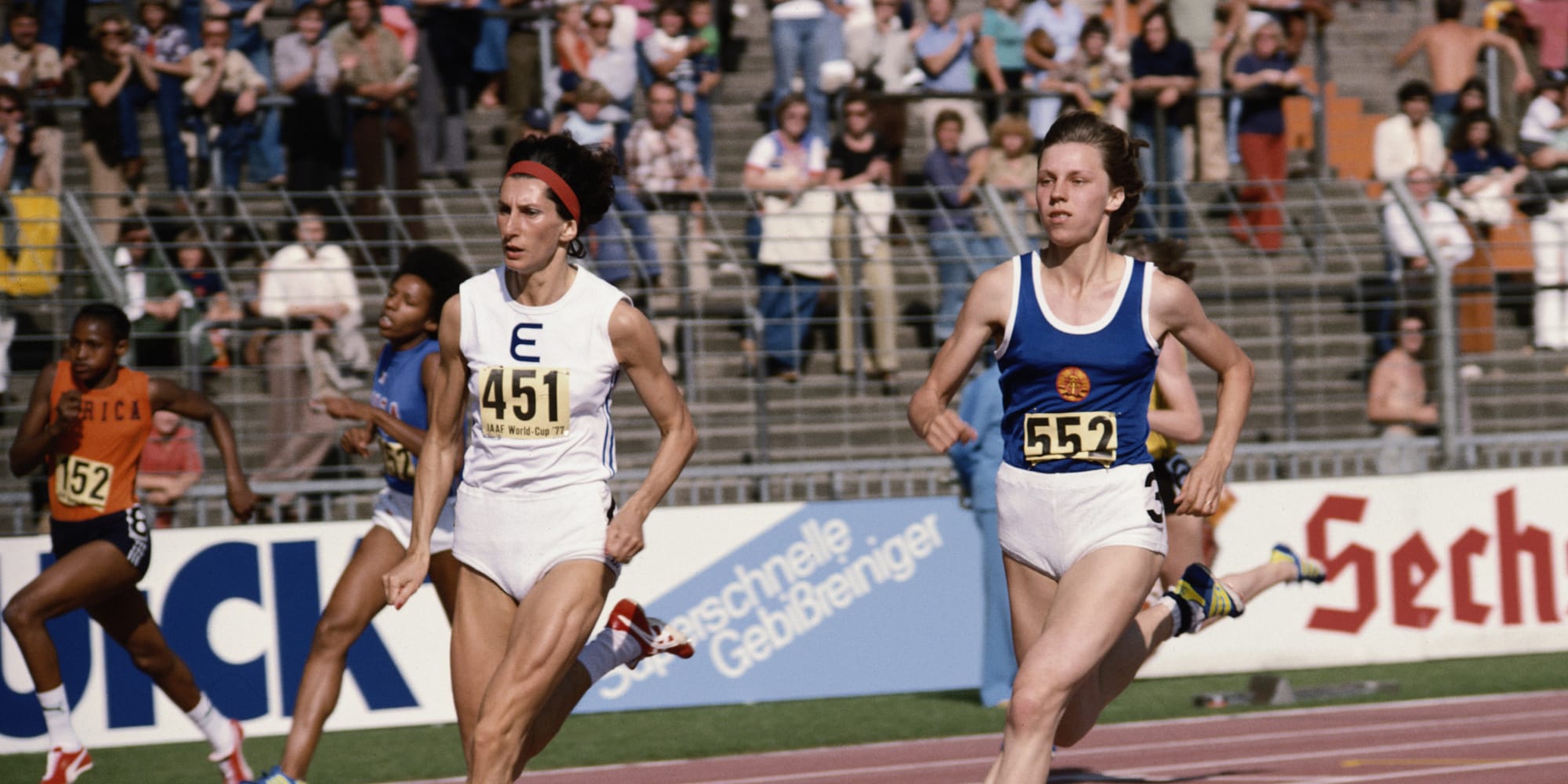


Very few athletes can match Irena Szewinska for longevity or versatility. And no athlete in European Athletics Championships history can match her medal haul of 10 medals which she achieved across four editions in six different events.
In the countdown to Birmingham 2026 (10–16 August), we look back at 26 unforgettable moments from European Athletics Championships history, including Szewinska's brilliant sprint double in Rome 1974.
The background
There had been a profound change in the hierarchy of women’s sprinting in the early 1970s.
Poland’s Irena Szewinska had won three gold medals at the 1966 European Athletics Championships and 200m gold at the 1968 Olympic Games in Mexico City before East Germany’s Renate Stecher would take the sprinting scene by storm in the early 1970s.
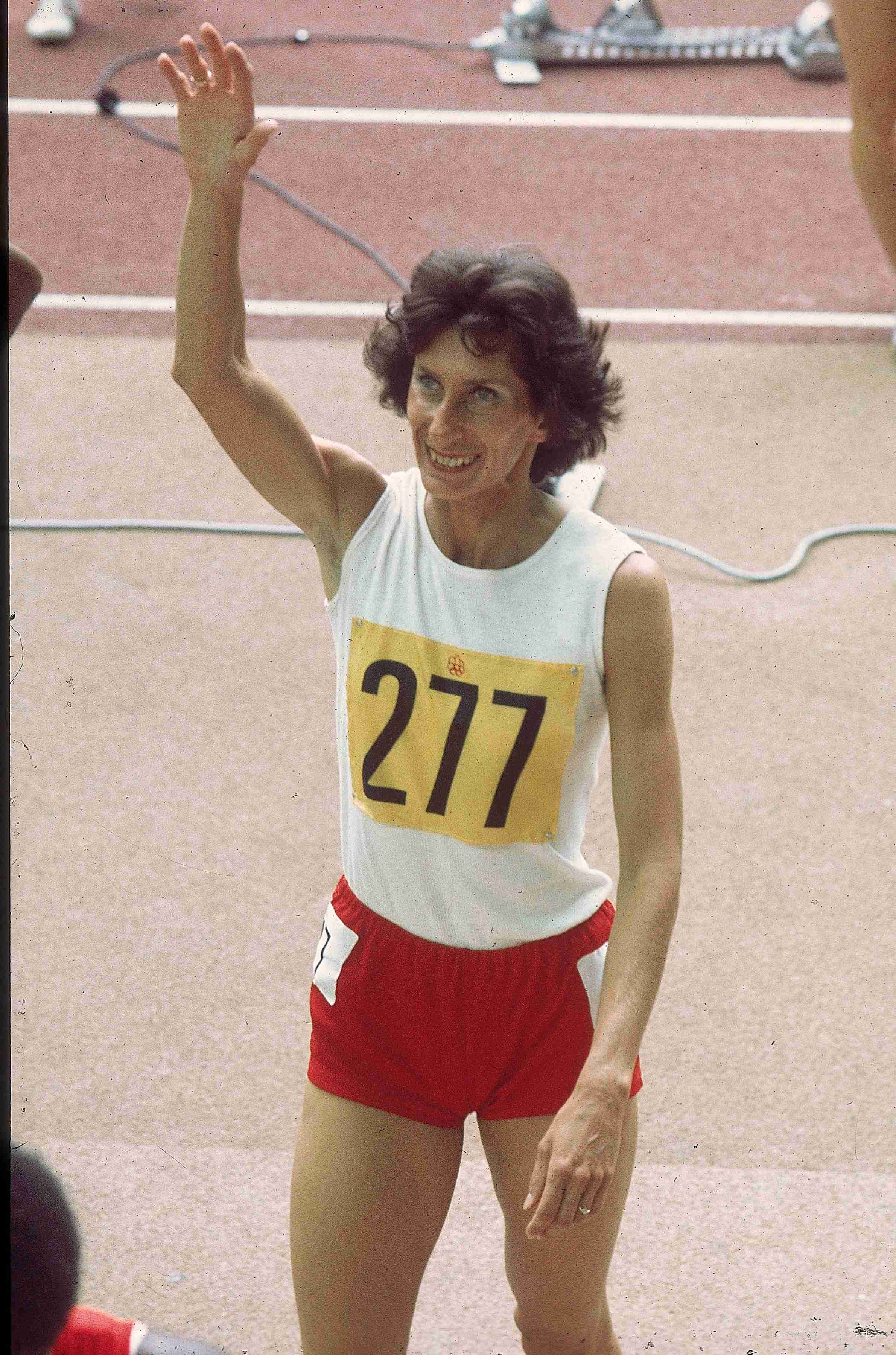
Admittedly, Szewinska took time away from the track after 1968 to start a family but Stecher thoroughly defeated the Pole on her return at both the 1971 European Athletics Championships in Helsinki as well as at the 1972 Olympic Games in Munich, part of a series of 90 successive race wins in the sprints spanning from 1970 to 1974.
But at the 1974 European Athletics Championships in Rome, Szewinska proved she was far from a spent force. She soared to the sprint double in the Stadio Olimpico on her way to becoming the most bemedalled athlete in European Athletics Championships history.
What happened?
The 100m final played out as expected. Drawn in lane one, Stecher led Szewinska out of the blocks with her powerful, bullet-like start and the East German was still leading the final after 70 metres.
But with a performance that thoroughly rolled back the years, Szewinska flowed past the reigning champion in the last 15 metres to win in a championship record of 11.13 - her first European title in eight years - ahead of Stecher in 11.23.
"This has to be rated among the great sprints of all-time," enthused Athletics Weekly. Szewinska broke the championship record despite the moderate handicap of a 1.2 m/s headwind. And despite the less than favourite wind, Szewinska's winning time was only a fraction slower than Stecher’s 11.07 clocking at the 1972 Olympics, the fastest ever fully automatic time at that juncture in history.
Szewinska and Stecher would also cross paths in the 200m and in front of a crowd of more than 50,000 - many of whom had come to watch home favourite Pietro Mennea win the men's 200m title on the same evening - the Pole prevailed again in a thrilling race.
The final played out similarly to the 100m with Stecher leading Szewinska off the bend before the long-striding Pole glided past the East German to complete the sprint double. Her time of 22.51 ahead of Stecher’s 22.68 was another championship record despite an even stronger headwind of 2.8 m/s.
Szewinska added to her medal tally with bronze for Poland in the 4x100m but her best performance of the championships came arguably in the one event in which she didn’t win a medal.
Szewinska showed her remarkable versatility by clocking a sensational 48.5 anchor leg in the 4x400m final to pull the Poles up to fourth in 3:26.4, a performance which was almost three seconds faster than the previous championship record but still insufficient to be rewarded with a medal, such were the competitive advancements in women’s athletics in the 1970s.
Despite becoming the first woman in history to break the 50 second-barrier for 400m earlier in 1974, Szewinska was still a relative novice at the event at this stage of her career but the event would become her primary focus in the last chapter of her gloried career.
The aftermath
After a relatively low-key 1975, Szewinska focused with renewed vigour on the one lap event in 1976 and the Pole has the notable distinction of becoming the last woman before Marita Koch to hold the world record in the discipline.
Szewinska broke the world record with a 49.75 clocking on her home track in Bydgoszcz ahead of the 1976 Olympic Games in Montreal where she won her third Olympic gold medal, shattering her world record with a 49.29 clocking to win the title by over one second.
At the 1978 European Athletics Championships in Prague, Szewinska would have to give way to Koch who would dominate the event until her retirement in 1986 but the Pole still won bronze medals in both the 400m and 4x400m, taking her tally up to a record-breaking 10 medals in European Athletics Championships history.
Almost 50 years later, no athlete has surpassed Szewinska’s medal haul at the European Athletics Championships and her Polish 400m record of 49.29 stood as a national record for 48 years, fittingly until the 2024 European Athletics Championships in Rome where Natalia Bukowiecka - who was still competing under the maiden name of Kaczmarek - won the title ahead of Ireland’s Rhasidat Adeleke in a classic final.
"Coming to the start I was dreaming about the Polish record but this 48.98 was something more than my imagination," said Bukowiecka who, like so many Polish athletes, has cited the trailblazing Szewinska, who died in 2018, as having a profound influence on her career.

Away from the track, Szewinska was also a trailblazer in the corridors of power. She was one of the first women to be elected onto the European Athletics Council in 1998 as well as one of the first women to serve on the World Athletics Council in 2005.
Szewinska also served as President of the Polish Athletic Association (PZLA) and Vice President of the Polish Olympic Committee.