

Long before Amanal Petros became a world and European medallist, German record-holder and Olympic marathon runner, running was just part of everyday life.
There were no tracks, no structured sessions, no carbon-plated shoes and no coaching plans pinned to walls.
There was just a small village in the Tigray region of Ethiopia, a group of children and a six-kilometre run to school. “When I was seven years old, we started going to school,” Petros says. “We didn’t have cars or motorbikes, so we had to run.
“We were five or six children from the village and we went together,” he says. “We played games on the way. We had fun. Sometimes we ran slowly, sometimes faster. Then suddenly we were at school.”
Listening to Petros, it’s obvious that athletics existed in his life long before he ever thought of himself as an athlete.
His story is not neat or straightforward. It contains hardship, displacement and uncertainty, but also joy, friendship and belonging.
What stands out most is how little of it he tells like a sports star.
He had no formal talent pathway, no early specialisation and no grand long-term plan. Just movement, community and the simple joy of running.
From speaking to him – fresh from an “easy” 20km run at 3:45 per kilometre pace – it’s clear that the happiness, purpose and sense of belonging athletics has given him are immeasurable.
Running before athletics
Petros grew up in a rural village without electricity or urban infrastructure. Life revolved around school, farming, family and community.
“It was very natural,” he says fondly. “We had agriculture, animals, honey, milk, cereal – everything we needed. It was not city life, but we had a good life.”
Sport was woven into that environment informally. Football, volleyball and running happened organically among children rather than through clubs or organised structures.
“We used to run and play football and volleyball and basketball,” he says. “we were always moving. But not in a particularly structured or serious way. It was just activity, just fun.”
That is what Athletics for All is about. Just moving.
One of the recurring themes across European Athletics’ current participation strategy is the recognition that movement often exists long before people identify themselves as “athletes”.
Many people – particularly recreational runners and young participants – engage with movement without feeling connected to formal athletics structures.
For Petros, at that stage, he was not “training”, he was simply living an active life, and the foundations of an elite endurance athlete were already quietly being built.
A different kind of transition
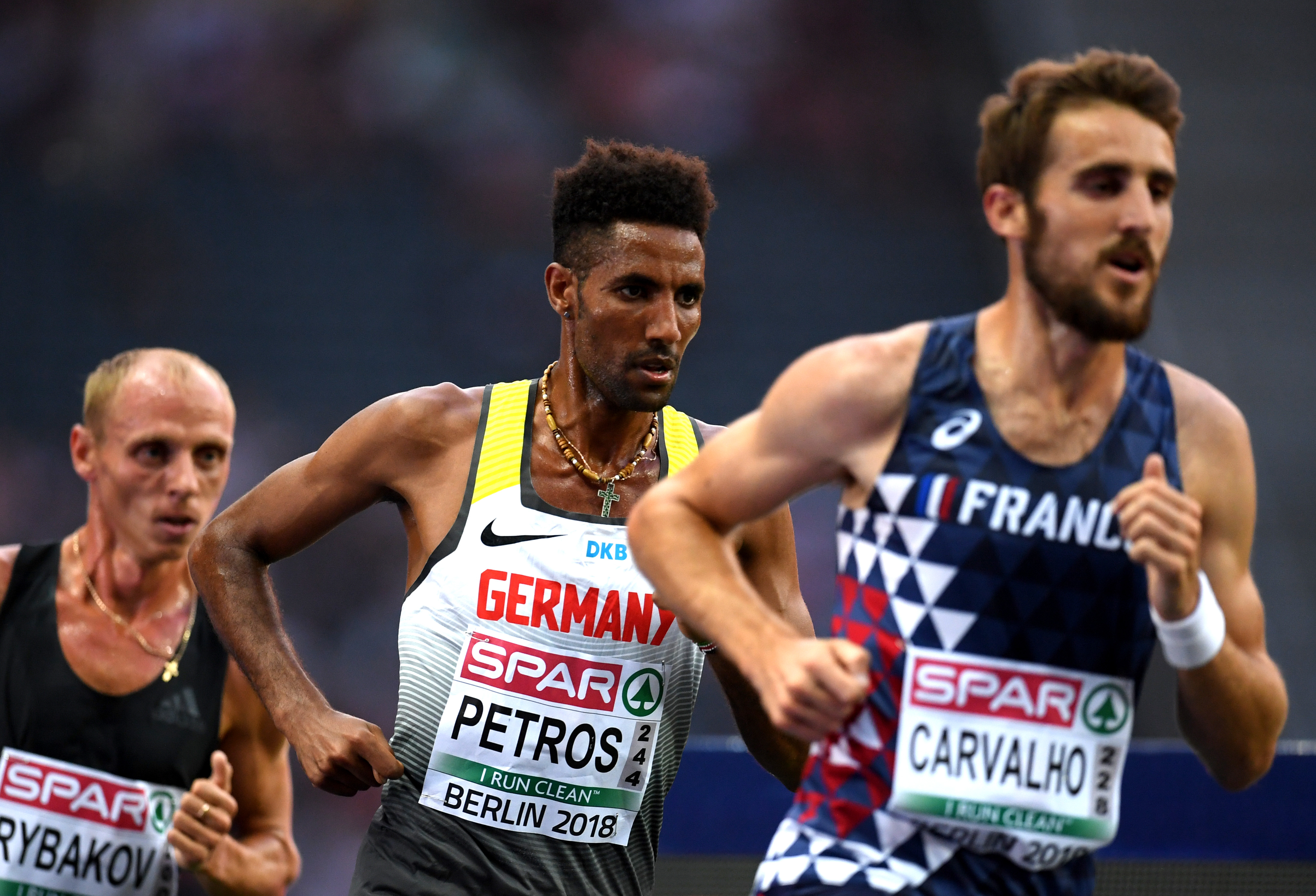
At 16, Petros moved alone to Germany.
The decision, shaped by political instability and conflict in the region, completely changed the direction of his life. And the transition was not straightforward.
“The language was very, very difficult,” he says. “The culture and mentality were also completely different for me.”
Much of his early focus had little to do with sport. He was trying to learn German, understand social norms and adapt to an entirely unfamiliar world.
“That was one of the most important things,” he says. “Learning the language, the mentality, the culture.”
Initially, football became his route into community life.
“The goal was really just to get out from the refugee place, meet people and communicate,” he explains.
Then, almost accidentally, athletics entered the picture. While running recreationally near his accommodation, another runner noticed him and asked which club he belonged to.
Petros laughed. “I told him: ‘I’m not even a runner. I play football.’”
The man invited him to a birthday gathering with local runners. Petros still remembers how different the atmosphere felt.
“In football, after games everybody drank beer,” he says. “Here everybody was drinking water and orange juice.”
More importantly, he remembers being made to feel welcome.
“They were like family,” he says. “They supported me. They gave me clothes, shoes, spikes. They invited me to things.”
Finding community through movement
More than performance, community is the thread running through almost every part of Petros’ story.
Athletics gave him structure, friendships and stability at a moment when much of life felt uncertain.
“It was really important,” he says. “I wanted to focus on the future.”
There is often a tendency in elite sport storytelling to impose inevitability onto success, as though the champion was always visible from the beginning. Petros rejects that idea completely.
His first race in Germany was not extraordinary by elite standards. It was a local 10km in roughly 36 minutes. But he won.
“They gave me a little trophy,” he says. “The next day there was a headline in the local newspaper. I was so happy.”
He still has the trophy now, and during the interview, he physically gets up to retrieve it and hold it up to the camera.
“That race gave me motivation, hope and energy,” he says. “It opened my future.”
Petros has gone on to win European half marathon bronze in 2024, world marathon silver in 2025 and set national records, but it’s clear how much that first trophy still means to him.
And it speaks directly to one of the central ideas behind Athletics for All. Positive early experiences really do matter.
Not necessarily because they immediately produce elite athletes, but because they create emotional connections with movement and community that can shape lives long-term.
Athletics for All focuses on creating more accessible entry points into sport through schools, clubs, communities and recreational environments.
It’s about recognising that participation pathways are rarely linear and that sport can create value far beyond medals and podiums.
And it’s something that’s perfectly reflected in Petros’ journey.
Beyond performance
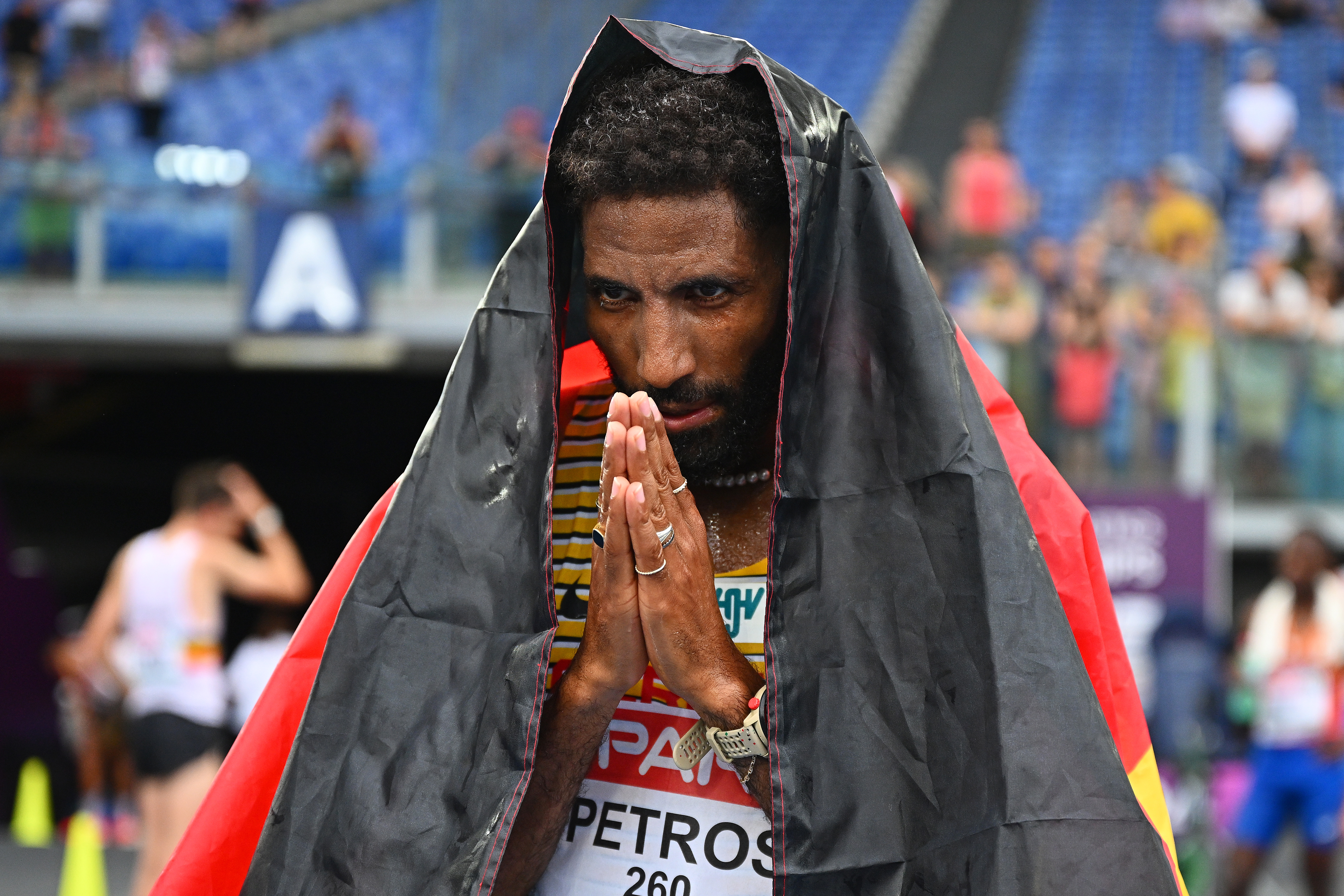
Today, Petros is one of Europe’s leading marathon runners. He continues targeting major championship success, including Birmingham 2026, but he speaks about sport in completely non-commercial terms.
“Sport for me isn’t about business or money,” he says. “It’s freedom, democracy, peacefulness, health and connection.
“It doesn’t matter your culture, colour or background. Everybody stands on the same start line.”
Petros doesn’t just talk the talk. He regularly joins amateur and recreational runners for community sessions and local events.
“I love running with runners of all ability,” he says. “Even if I’m faster or in a different category, I like sharing experience and giving people motivation.”
It’s a great way that he himself is widening the number of ways people can connect with movement, clubs and community.
And Petros has been on both sides. Before he was a record holder, he was just a teenager trying to find connection in a new country through movement and sport.
“Everything is possible”
Much of Petros’ journey began through simple acts of openness and community – someone noticing him running, inviting him into a group, lending him shoes, welcoming him into a different environment.
At its heart, Athletics for All is not about elite athletics at all, it is about access. Access to movement, to community, to belonging, to possibility.
Petros experienced those experiences himself, so he can understand the impact they have.
In the refugee accommodation where he once lived, staff now use his story to encourage younger residents and children to think differently about their own futures.
“That makes me very proud,” he says quietly. “It gives me energy.”
Then he returns to a phrase he repeats several times throughout the conversation.
“Everything is possible.”
For an Athletics for All audience, that may ultimately be the most important point of all. Not everybody who starts moving will become Amanal Petros.
But Amanal Petros himself only started by moving.