


At the age of 35, Colin Jackson was looking to make history by becoming the first track athlete in European Athletics Championships history to win four European titles in the same event.
Jackson’s remarkable run of dominance stretched all the way back to the 1990 European Athletics Championships in Split.
By the time of the 2002 European Athletics Championships, Jackson still held the world indoor and outdoor records, although his last major outdoor accolade dated back to the 1999 World Athletics Championships in Seville where he won his second title.
In the lead-up to Birmingham 2026 from 10-16 August, we are taking a look back at 26 classic moments from the European Athletics Championships, including Colin Jackson’s incredible reign in the 110m hurdles.
The background
Prior to the 2002 European Athletics Championships, three athletes had won four European titles in the same event.
That exclusive list was composed by Soviets Janis Lusis and Nadezhda Chizhova who achieved four titles in the men’s javelin and women’s shot put respectively before Heike Drechsler emulated this feat in the long jump in 1998 and with a chance, albeit a slim one, of winning a fifth title in Munich.
The fourth athlete to join this exclusive group was Jackson’s long-time British teammate Steve Backley. He won his fourth title in the men’s javelin the evening before the 110m hurdles, defeating Russia’s Sergey Makarov who many people predicted would end the Brit’s reign.
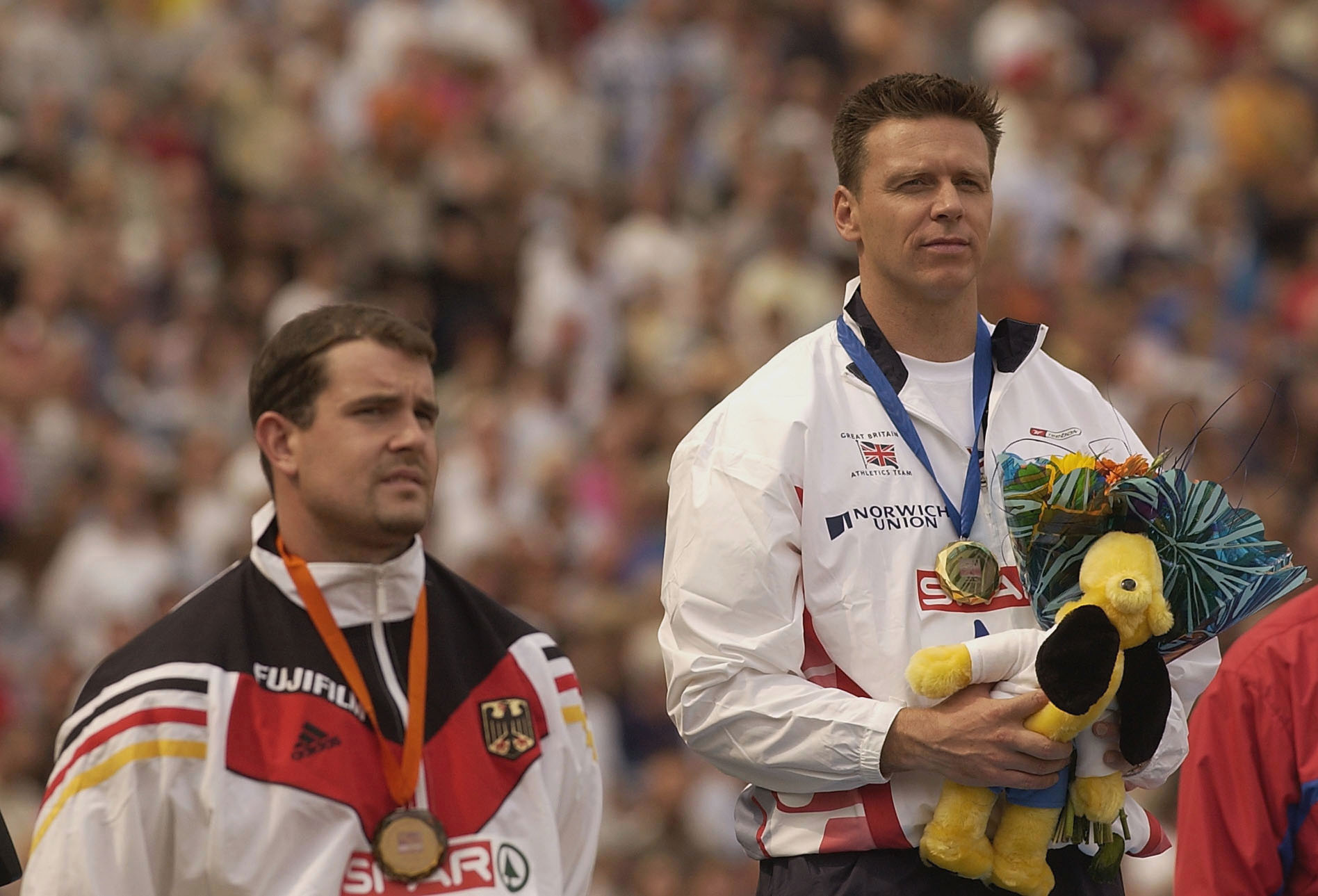
However, no track athlete had achieved the feat. Could Jackson fend off a pack of younger rivals in Munich and become the first?
Officially at the lower end of the veteran ranks having turned 35 earlier in the season, Jackson’s career reached its full circle in Munich. He made his first European Athletics Championships team as a teenager on German soil in Stuttgart 1986 but an untimely injury meant Jackson was reduced from a participant to a mere spectator.
But four years later, Jackson stormed to his first European title in Split in 1990 in 13.18. He would retain his title in Helsinki in 1994 in a championship record of 13.08 before improving to 13.02 - a championship record which still stands - to win a hat-trick of titles in 1998.
Jackson had showed glimpses of form ahead of the championships by winning his third European indoor title in March in 7.40 - faster than his winning times in 1989 (7.59) and 1994 (7.41) - but he looked a somewhat infallible figure at the Commonwealth Games in Manchester just two weeks prior when he was soundly beaten by South Africa’s Shaun Bownes.
Could Jackson reign again in Munich?
What happened?
After a surprise defeat in Manchester which Jackson would later describe as “a freak accident,” the reigning three-time champion was back in form in Munich.
Jackson clocked the fastest times in both the heats (13.41) and semifinals (13.21) to raise the prospects of a historic fourth title. Surely only something wholly unexpected from one of his rivals or another “freak accident” would stop Jackson from winning the title again?
Jackson made a typically good start in the final although he was matched stride-for-stride by Latvian’s Stanislavs Olijars, the 2000 European indoor champion, who was drawn two lanes inside Jackson, until the eighth barrier.
But Jackson drew smoothly away from Olijars over the last two barriers to write his name into the history books as the first athlete to win four successive European titles on the track.
Jackson didn’t need to pull it out of the inventory on this occasion but for the last time on the European stage, the 35-year-old produced his trademark dip finish which took his torso until the photo finish beam, meaning the clock kept running and initially stopped at 13.23.
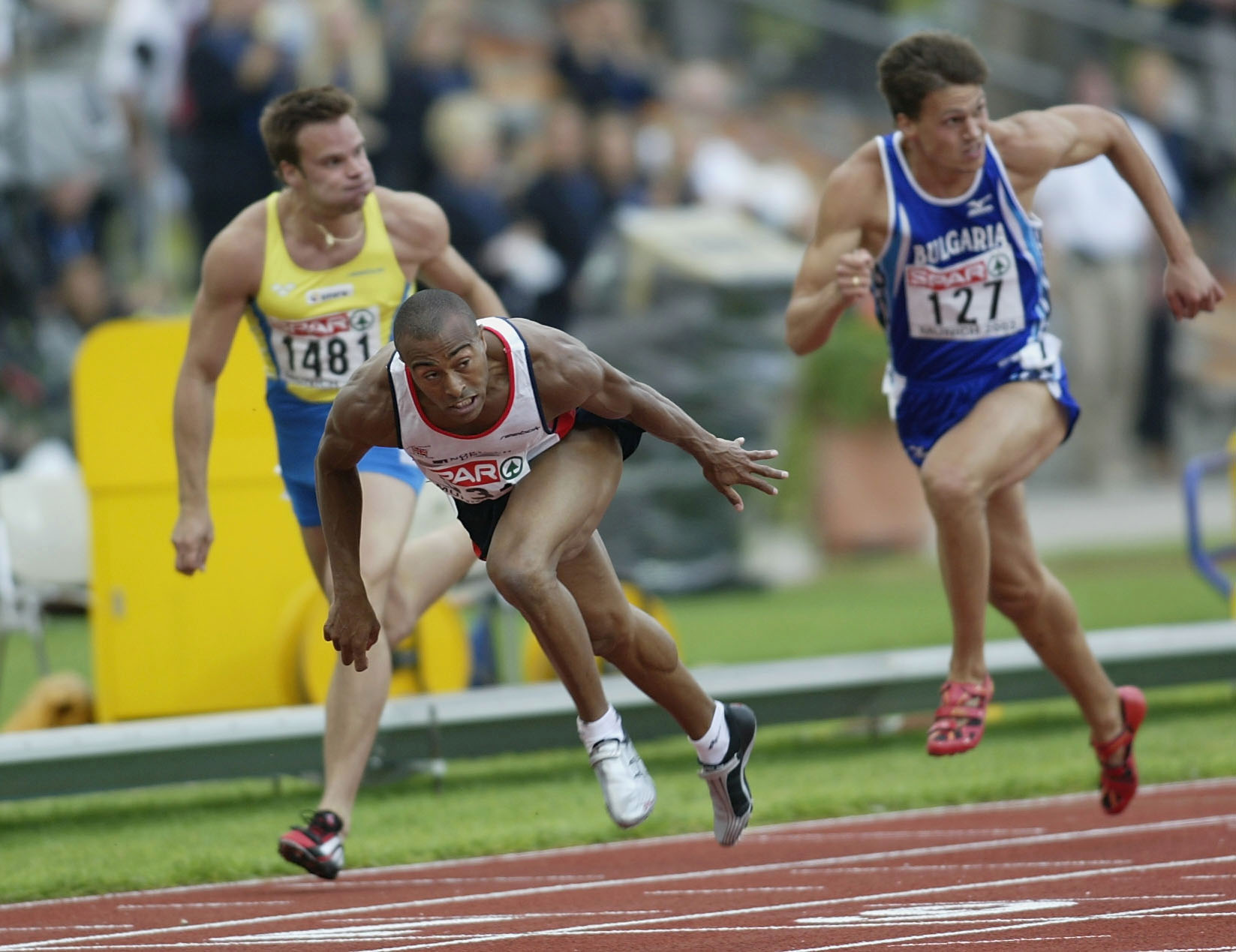
His time was subsequently corrected to a timely season’s best of 13.11 with Olijars credited with the 13.22 for silver.
“Before the race I was on the training track and feeling absolutely no pressure whatsoever. I was laughing and joking with my coach Malcolm Arnold and not giving a single thought to the possibility of a fourth European gold medal.
“This victory was more important to other people than to me. To me it was important to go and win it because it was the fourth time - I've felt this title was mine.
“But it was particularly important to other people like Malcolm because he knew it would be his last championships outdoors with me, and the fact his career had started here when John Akii-Bua [whom Arnold coached] had won the Olympic 400m hurdles at the 1972 Olympics.
“Yes, he did mention that to me beforehand,” said Jackson.
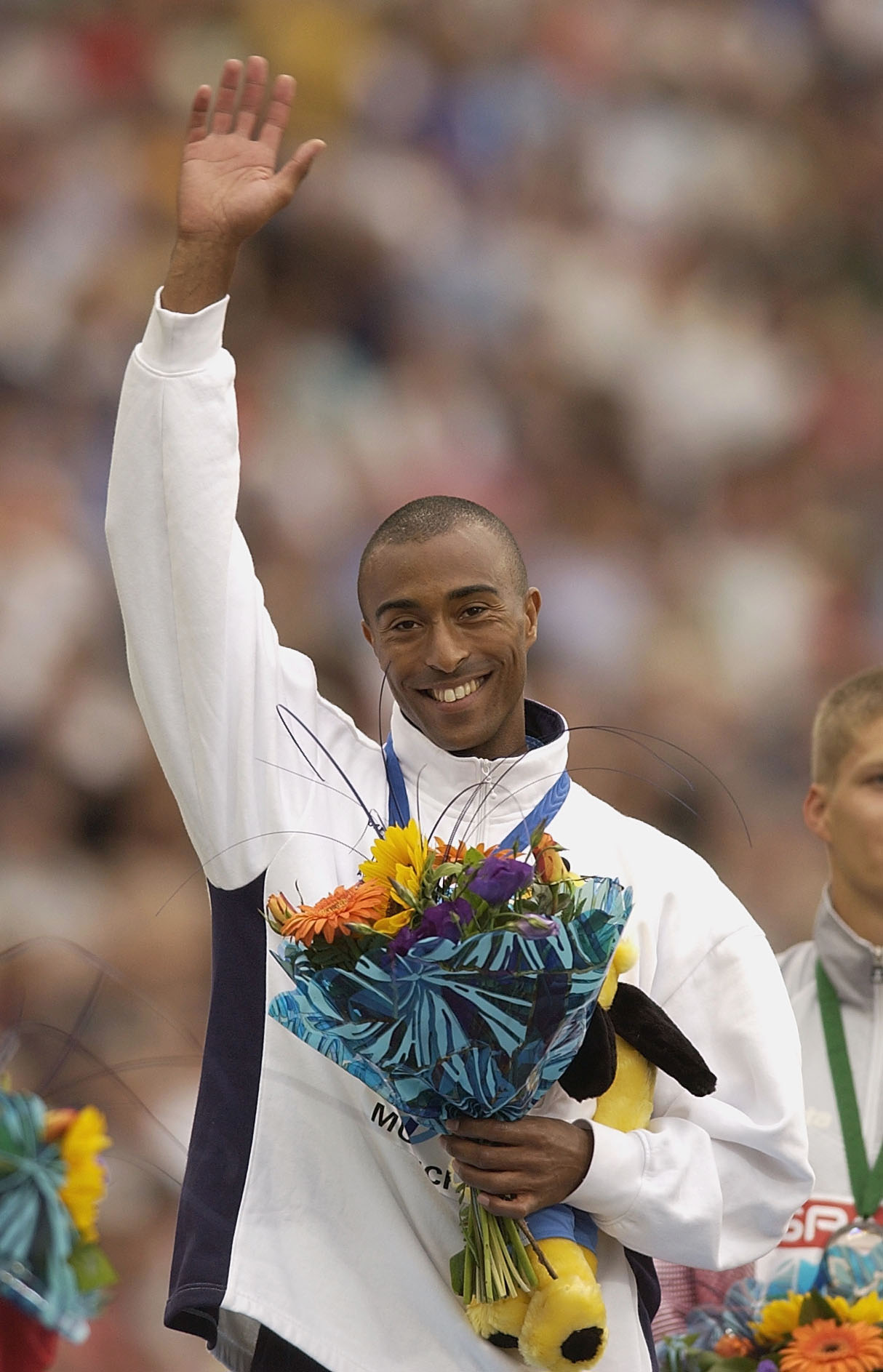
The aftermath
There wasn’t quite the same fairytale ending to the definitive end of Jackson’s international career at the 2003 World Athletics Indoor Championships in Birmingham where he finished fifth in the 60m hurdles final.
But even in retirement, Jackson still remains a perennially visible presence and voice in athletics. By the time of the 2006 European Athletics Championships, Jackson was ensconced in the BBC studio as a pundit in Gothenburg where Olijars succeeded Jackson as European 110m hurdles champion.
Jackson might have lost ownership of his world indoor and outdoor records but he still holds the European records both in the 60m hurdles with 7.30 and the 110m hurdles with 12.91 as well as the European Athletics Championships record with 13.02 in 1998.
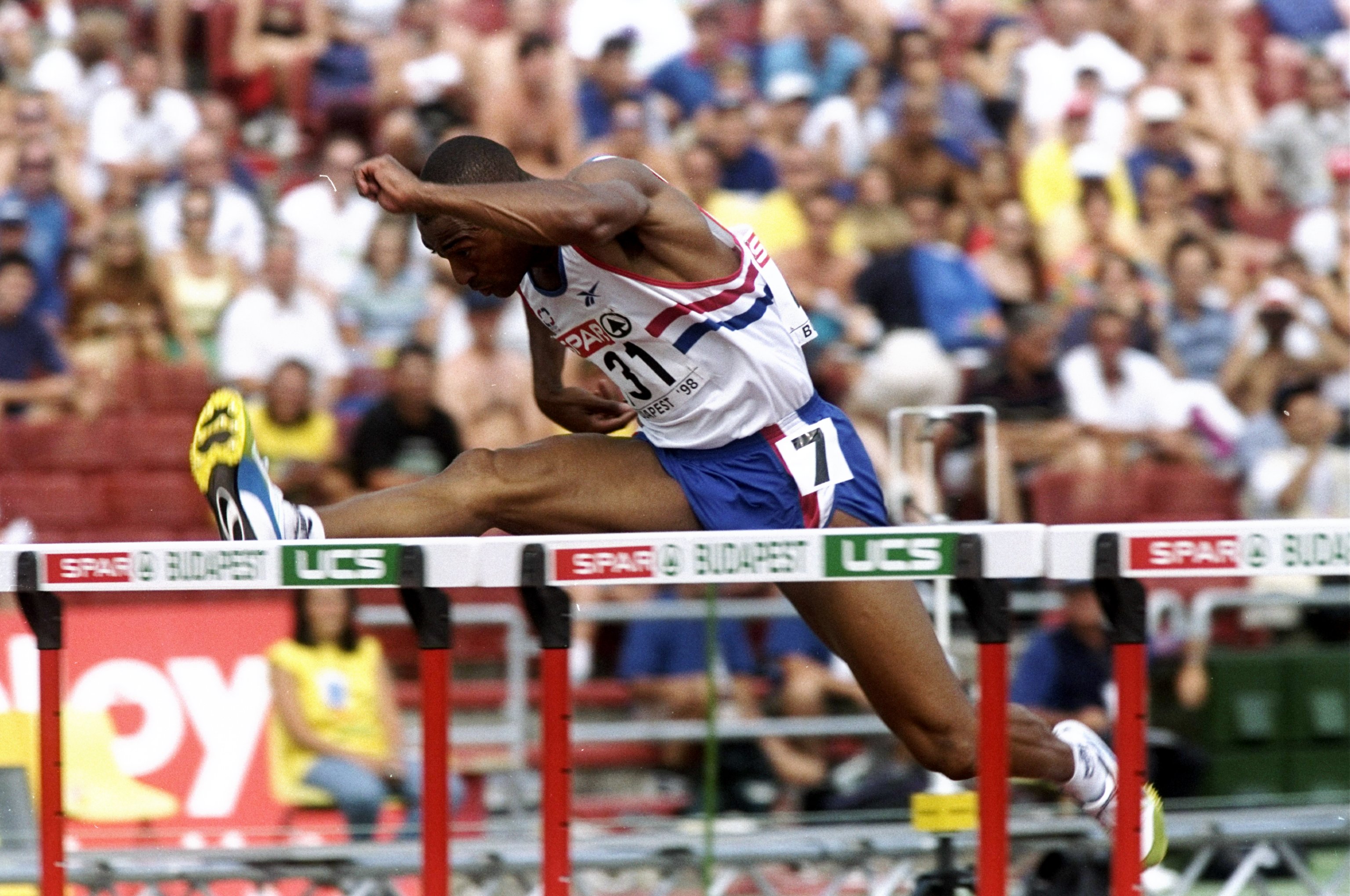
However, the strength and depth in the 110m hurdles in Europe is such that this record might come under some threat next month.
Some of the leading contenders include Lorenzo Simonelli from Italy who won gold in Rome in 2024 in a national record of 13.05 as well as Poland’s Jakub Szymanski and Spain’s Enrique Llopis, the gold and silver medallists respectively in the 60m hurdles at the 2026 World Athletics Indoor Championships in Torun.
Also watch out for France’s Just Kwaou-Mathey who became just the fifth European to break the 13 second-barrier last year with a 12.99 clocking.